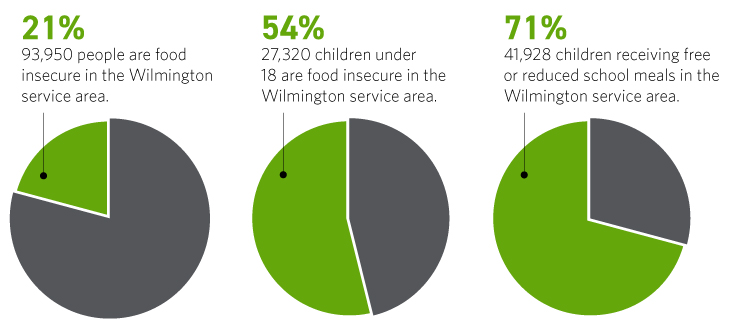
The SponsorThe Food Bank of Central & Eastern North Carolina (Food Bank), headquartered in Raleigh, NC, has been a pivotal force in combating hunger since 1980. Serving 34 counties across North Carolina, the Food Bank partners with more than 900 nonprofit organizations, including soup kitchens, food pantries, shelters, and programs for children and adults, to distribute food to those in need. The Food Bank effectively fulfills its mission through the use of five strategically located satellite distribution centers, including one in Wilmington. As an affiliate of Feeding America, the nation’s leading domestic hunger-relief organization, the Food Bank ranks among the top 15 in the nation and first in North Carolina for total food distributed. In 2020, it was honored as Feeding America’s Food Bank of the Year. The Need: Additional Operational SpaceThe Wilmington branch of the Food Bank is the largest hunger relief organization in its region, serving as a crucial hub for food distribution, volunteer activities, and nutrition and education programs. Currently supporting four counties — Brunswick, Columbus, New Hanover and Pender — the organization faces increased demand due to elevated local unemployment rates, which have led to a dramatic rise in food insecurity among children, families and seniors. In 2024, the Wilmington Food Bank distributed more than nine million meals. The organization’s 12,000 sq. ft. leased warehouse is significantly overextended, with refrigerated demand at 565% of capacity, frozen at 227%, and dry goods at 130%, leaving little margin to reliably meet future need. |
TOTAL DEVELOPMENT COST: ALLOCATION SECURED: BUSINESS TYPES: USES: PROJECT TIMELINE: ADDRESS: CENSUS TRACT: HIGHER DISTRESS COMMUNITY OUTCOMES: COMMUNITY SERVICES: |
The Project: Significant Community Expansion
To address these space constraints, the Food Bank purchased land at 1000 Greenfield Street in Wilmington’s southside in August 2020. The Food Bank has now completed construction of a new 30,000 square-foot facility, offering a 250% increase in space. The new facility will feature:
- A 500% increase in cooler and freezer space, with 4,500 square feet available for fresh foods and high-quality proteins
- A 110% increase, or 20,000 square feet, of dry food storage
- A 2,500 square-foot commercial kitchen, capable of producing 60,000 meals annually for children and seniors and flash-freezing produce for year-round distribution
- Dedicated volunteer areas to support expanded distribution efforts
- Additional staff and vehicles to enhance partner agency support
- A market providing affordable, healthy food options to the community
This expansion meets the immediate needs of the Food Books while supporting long-term community health initiatives by enabling cooking classes, a community garden, a workforce development program and expanded service to a fifth county, Duplin.
Community Impact of the Food Bank’s First Commercial Kitchen
The new 2,500 square-foot commercial kitchen, the first of its kind for the Food Bank, will significantly enhance program offerings by:
- Expanding Meal Production: Supporting 17 children’s programs with 20,000 meals annually for afterschool programs and 40,000 meals for summer programs, in addition to meals for the Medicaid Healthy Opportunities Program.
- Offering Community Cooking Classes: Weekly classes in English and Spanish will empower families with nutritional knowledge, supplemented by healthy food boxes.
- Launching a Culinary Arts Workforce Development Program: Providing 12-week, no-cost culinary training for 12 students each quarter to support certification and job opportunities.
- Enhancing Disaster Relief Capabilities: As a contracted emergency meal provider for New Hanover County shelters, the kitchen can deliver up to 5,000 hot meals daily during disasters.
Our Analysis and Support
Cherry Bekaert’s Strategic Financing Services (SFS) team was selected by the Food Bank after they interviewed several consulting firms. Leveraging SFS’s experience and strong relationships with national community development entities (CDEs), the Cherry Bekaert team secured the $12,500,000 allocation commitment from a CDE that focuses on impacts benefiting non-metro communities.
Our professionals worked closely with the CDE to support the project and its intended community impacts. Cherry Bekaert’s Strategic Financing Services team completed a timely and smooth closing process while aligning with the Food Bank, the CDE and the investor. Ultimately, this financing allowed the Food Bank to retain critical funds that will be used to address the food shortages experienced by many in its geographic footprint.