With the rise of automation tools and artificial intelligence (AI), digital transformation is no longer a catch-all term for information technology projects. Professional services firms that want to remain competitive must intentionally use technology to transform their processes, rather than relying solely on digitization.
90% of organizations report they are undergoing digital transformation, while 75% plan to adopt AI in the future. Whether a law, accounting, consulting or another service-driven industry, organizations that proactively adopt these tools will be in a better long-term position than firms that decide to wait and see what other companies do.
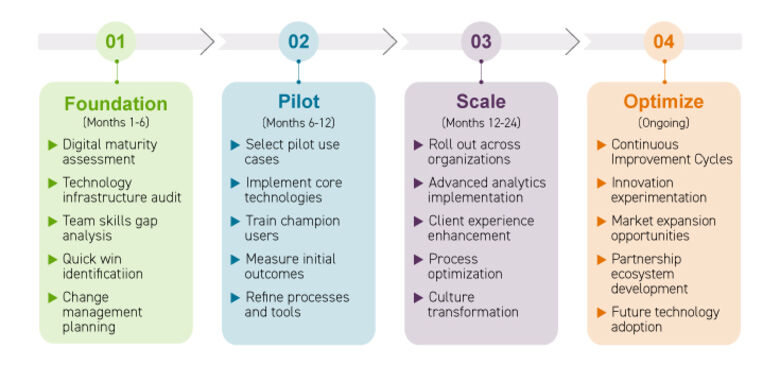
Firms must work to truly transform their processes to stay ahead in the AI era. When working with clients, we break down the digital transformation journey into a simple four-step roadmap.
Digital Transformation Defined
First, having a clear understanding of what exactly a digital transformation entails is essential. Our professionals define this process as a journey to apply digital technology and improvements to all areas of a business, resulting in fundamental changes to business operations and increased value to customers.
Digital transformation is a catalyst for:
- Technology Adoption
- Process Optimization
- Customer Experience Enhancement
- Cultural Change
- Data-driven Decision-making
The competition for talent, in particular, is one area that stands to benefit from AI. Finding skilled employees has always been a challenge. With automation, the question is not, “How do we replace workers?” Rather, the question is how businesses can use these tools to empower their teams to work more effectively and efficiently.
Step One: Foundation
Before any changes are made, firms must take a clear-eyed look at their current state. This means undergoing a digital maturity assessment, a technology infrastructure audit and team skill gap analysis.
Companies will also assess numerous areas, including:
- Existing Technology Infrastructure: What systems are in place? Are they integrated or siloed?
- Operational Pain Points: Where are delays, redundancies or manual processes slowing things down? What are some minor pain points we can quickly address for quick wins?
- User Experience: How do employees and clients interact with your systems? Are tools intuitive and accessible?
This phase is about identifying gaps, opportunities for small wins and the company’s appetite for risk. With a strong assessment, firms can see areas in the business that can be fixed relatively quickly or serve as a pilot for change.
Transformation does not have to mean undergoing a series of massive overhauls. Setting the foundation for smaller changes allows transformation efforts to snowball. Once leadership has success stories to share, it often becomes easier to gain employee buy-in and to start shifting the company culture.
Foundation Use Case
An architecture and engineering (A&E) firm underwent a technology infrastructure audit and discovered many of its platforms were siloed and outdated. The planning process was largely manual and often slowed down project progress. Through this process, the firm identified the need for cloud-based collaboration platforms, as well as automated design and planning tools.

Step Two: Pilot
Once areas for improvement are identified and a foundation for change is built, firms can begin working on a pilot project. This includes:
- Selecting Pilot Use Cases
- Implementing Core Technologies
- Training Champion Users
- Measuring Initial Outcomes
- Refining Processes and Tools
For a successful pilot phase, companies should define their goals, prioritize high-impact projects with minimal complexity and choose the right platforms that integrate with existing systems.
Pilot Use Case
A law firm historically received monthly, sometimes weekly, reports on associate hours, associate productivity and realization rates. During the foundation and pilot phase, firm leadership discovered a way to automate these reports. Being a multi-generation law firm with varying levels of comfort with automation technologies, this change required additional buy-in from employees.
After rolling out the new automated dashboard, it became evident there was an issue with how data could be manipulated, and the data would often change and be inaccurate if it were re-sorted. The law firm worked to fix this coding issue before scaling the technology.
Step Three: Scale
Once a pilot proves successful, it’s time to scale. This phase involves expanding digital initiatives across the organization while ensuring consistency and sustainability. At this stage of the digital transformation journey, companies may begin to notice shifts in the culture and a path toward sustainable change.
Action steps during this phase include:
- Rolling Out Across Organizations
- Implementing Advanced Analytics
- Enhancing Client Experience
- Optimizing Processes
- Transforming Culture
Key considerations throughout these steps typically include establishing clear ownership for digital programs, as well as aligning change management teams to communicate the vision and address concerns.
The scale phase is also the time to ensure infrastructure readiness and check that systems can handle increased usage and data volume.
Scale Use Case
In the law firm example, scaling the dashboard required more than just technical deployment. The firm created internal champions within each practice group, hosted training sessions and integrated the dashboard into daily routines. This structured approach helped embed the tool into the firm’s culture and operations.
Step Four: Optimize
The final phase of the digital transformation journey is ongoing, and professional services firms will begin seeing noticeable successes resulting from process transformation. Now is the time to broaden the transformation efforts throughout the business through:
- Continuous Improvement Cycles
- Innovation Experimentation
- Market Expansion Opportunities
- Partnership Ecosystem Development
- Future Technology Adoption
Firms that embrace optimization position themselves for long-term success. They don’t just implement technology — they automate to innovate, continuously improving how they serve clients externally and operate internally.
Optimize Use Case
An A&E firm found success in slowly implementing automated design and planning tools. They introduced the platform to a small group of employees who served as pilot users and then as champion users once more teams had access to the technology.
Once issues were ironed out, the firm moved on to the scale phase and rolled the automation tools out to the entire organization. Reaching the optimize phase, the firm had the necessary processes in place to drive ongoing market expansion and digital transformation.
Navigating Digital Transformation in Professional Services
Digital transformation is no longer a future goal — it’s a necessity for companies seeking to stay competitive, agile and client-focused. Cherry Bekaert helps professional services clients aligns people, processes, and platforms to unlock new efficiencies and insights.
Our Technology Advisory professionals have deep experience guiding companies through successful digital transformations, from the initial steps to scaling technologies across departments. Connect with us today to learn more about our technology advisory services.