


Choosing the right enterprise resource planning (ERP) software can seem like a daunting, expensive task, whether you’re selecting your company’s first ERP platform or needing to modernize an existing, but outdated, system.
Especially if your team is strapped for resources, it may seem easier to stick with basic accounting software or an old ERP platform than to implement new technology. Unfortunately, by waiting too long to upgrade, businesses hinder their growth and increase technical debt and operational costs.
Changing your ERP can serve as the initial catalyst for modernization by moving to cloud-based solutions and leveraging additional capabilities, such as data integration and artificial intelligence (AI). This guide will walk you through the main steps, considerations and challenges of ERP selection to help your business successfully navigate the process.
Key Steps in ERP System Selection
Typically, there are six main tasks involved when searching for a new software solution:
1. Secure Executive Buy-in
Ensure you have the agreement and support of executives and the board for the new system before starting. Without the support of senior management, it can be difficult to gain employee buy-in and implement broad change.
2. Provide Leadership
Appoint a leader from the accounting department with the authority to guide the evaluation team. This will drive cohesiveness in a cross-functional search team that may span across various departments.
3. Identify Solution Requirements
Define your objectives for the new software by considering process improvements, performance enhancements and desired outcomes. Questions to help identify ERP needs include:
- What are the biggest pain points in the company?
- Are there any bottlenecks that need to be addressed?
- Are there any high-spend departments that could lower costs with ERP?
- Are there specific areas that do not need to be integrated with the ERP system?
This will help you make a list of functional requirements for the software.
4. Assemble a Project Team and Governance
Form a diverse team to drive the evaluation process, including members from various roles, both management and staff. Establish a governance model for the evaluation and execution phase of the project.
5. Create a Project Schedule
Develop a timeline for selecting the new system, tailored to your organization’s size and the complexity of its needs.
6. Conduct System Evaluations
Once you have narrowed down your top potential vendors, evaluate each ERP system to assess the platform’s functionality, integration capabilities and customization options.
Top ERP Selection Criteria Checklist
Once you have a stakeholder buy-in, identify the project team and create a schedule, it’s time to explore your ERP options. As you meet with vendors and attend demos, the following criteria will help ensure the software will add value to your business:
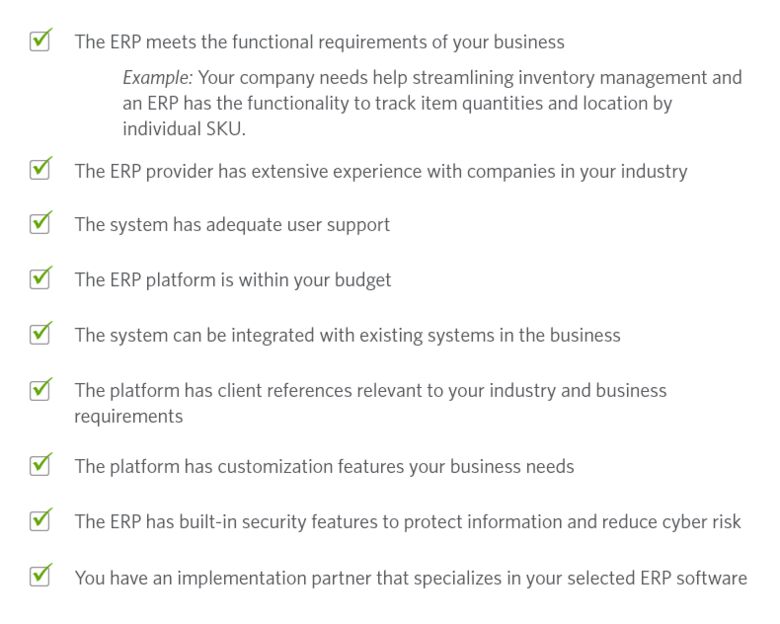
Your checklist should cover your business requirements, align with the industry’s regulations, support users and existing systems, and include built-in security to help protect your organization from cyber risks.
How the Right ERP Drives Modernization
ERP systems impact nearly every core business function, including human resources, finance and accounting, sales and marketing, and customer service. Selecting and integrating an efficient platform is often a driving force behind modernization, as data integration across siloed departments remains a top barrier for many leaders — 84% of mid-market finance leaders are focusing on improving data quality and integration, according to Cherry Bekaert’s CFO Survey.
You can achieve streamlined data and integration by selecting a new ERP, or upgrading an old one, and connecting the system with your accounts payable and accounts receivable (AP/AR), customer relationship management, and analytics applications. Data integration is crucial to unlock the full potential of AI and automation tools.

Common Mistakes in ERP Selection
Common mistakes in the selection process include a lack of stakeholder buy-in, inadequate project planning and failure to consider ongoing expenses.
Lack of Stakeholder Buy-in
A lack of buy-in may cause resistance to change and wavering commitment across the organization. Alternatively, having too many stakeholders involved may also pose a challenge and result in delays or conflicting decisions.
Inadequate Planning
Starting the selection process without a clearly defined plan and project scope can lead to selecting a system that doesn’t adequately meet the business’s needs. For example, a company may forego a needs assessment and start the selection process with the assumption that the main goal is a new accounting tool, only to discover halfway through that a customer relationship management (CRM) is also required.
Failure To Consider Expenses
Businesses may not understand the full implications of a new ERP on the budget or return on investment (ROI) if they don’t consider upfront and ongoing expenses, such as software maintenance, support services, customization requirements, implication costs and more.
Strategies To Mitigate Selection Risks
To avoid wasted resources, businesses should have a clear understanding of what the selection process entails and:
- Engage Stakeholders Early: Involve key stakeholders from the beginning to ensure their needs and concerns are addressed.
- Perform a Thorough Needs Assessment: A comprehensive assessment and clear documentation prevent scope creep and misaligned expectations.
- Choose Scalability: Analyze potential ongoing expenses of a new system and select a flexible ERP solution that can be augmented within budget as the business evolves.
How an ERP Consultant Can Help
Experienced ERP consultants can streamline the selection process so you can move forward with a decision, confident in the software’s capabilities and your organization’s ability to successfully implement change. Consultants help:
- Assess current ERP systems to determine opportunities for process improvement.
- Create a schedule and budget for the selection process.
- Facilitate vendor discussions and demos. Fact-check and validate statements vendors make regarding capabilities.
- Facilitate proof of concepts where necessary for business specific requirements.
- Build an ERP roadmap for implementation, optimization and rescue.
ERP consultants offer practical, industry-focused guidance to help you build an effective and sustainable ERP strategy.
Your Guide Forward
Cherry Bekaert’s technologists have vast experience in independently reviewing various ERP software options and working with clients to select the right system tailored to their unique business needs. With the right solution in place, your company can achieve optimal performance and scalability that fits your company so you can innovate, improve operational efficiency, and enhance your customer and employee experience.
Reach out to a Cherry Bekaert Digital Advisory professional today to discuss how we can help you through the selection process.
Related Insights