
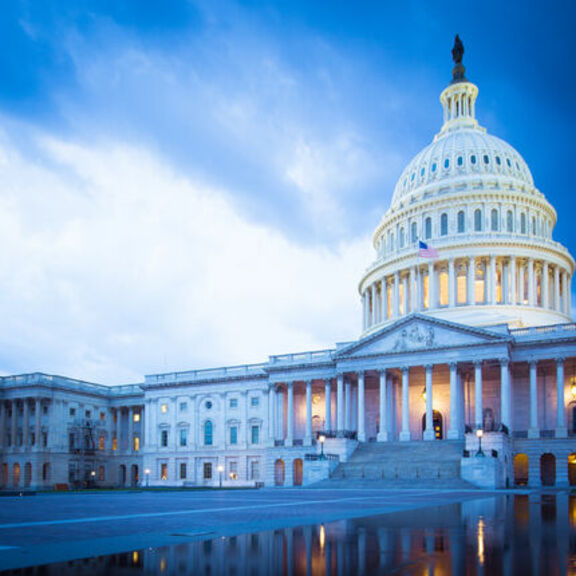
Tax Policy and Elections
Election outcomes play a central role in shaping the direction of tax policy. Tax policy, in turn, can have broad economic implications and frequently influences decision-making among both businesses and individuals. Understanding and proactively monitoring tax policy — and the factors that influence it, including elections — is essential for navigating uncertainty and developing effective strategies in a changing tax landscape.
Recent Tax Policy Developments Heading Into Midterms
Republicans’ most significant legislative accomplishment of 2025 was the enactment of the “One Big Beautiful Bill Act” (P.L. 119-21), a historically large tax measure. It was their success in securing unified control during the 2024 election that enabled Republicans to enact the expansive party-line package utilizing the budget reconciliation process.
While many tax provisions in P.L.119-21 were enacted on a permanent basis, the law provides only near-term certainty, particularly for partisan provisions, as party-line legislation is frequently revisited when control shifts. Notably, P.L. 119-21 dismantled several energy incentives that Democrats enacted on a party-line basis just three years earlier through the Inflation Reduction Act.
However, while party-line bills can be targets for revision, they can be difficult to unwind. Republicans were unable to repeal and replace Democrats’ 2010 Affordable Care Act legislation despite unified control in 2017, and during the 2024 election cycle, most Democrats endorsed an extension of significant portions of Republicans’ 2017 Tax Cuts and Jobs Act.
The 2026 Midterms
The composition of the 120th Congress will shape the short-term direction of tax policy — influencing legislative priorities, procedural strategy and prospects for additional tax reform. Control of both chambers will be decided during the November 3, 2026 midterm elections, with the new Congress convening two months later, on January 3, 2027.
In 2026, Republicans are seeking to defend their narrow majorities in both chambers, while Democrats are looking to build on momentum from their overperformance in the 2025 off-cycle elections.
Learn More About the Dynamics of the Midterm Elections
Midterms in the House Midterms in the Senate
After the Midterms
Whether the midterms result in a united or divided government will shape the near-term outlook for tax reform and, by extension, the economic behavior of taxpayers.