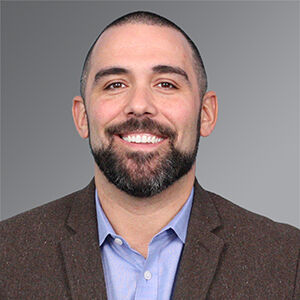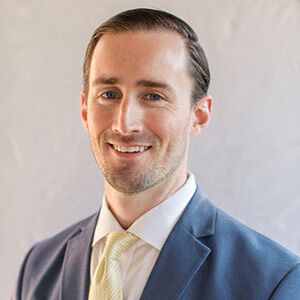


In episode 16 of Talkin’ Talent, Doug Smith and Evan Seward join Sam McCarthy to discuss when an organization should use an external search firm and the dynamics of temporary vs. permanent staffing solutions. They provide professional advice on understanding client needs, navigating recruitment challenges, and adapting to current staffing trends. Whether you’re optimizing your team or exploring new hires, this episode offers essential insights to enhance your recruitment strategies.
This episode covers:
- Insights on when an organization would benefit from external support
- Their tried-and-true approach to addressing client needs
- Current trends in staffing and recruiting, including an analysis of post-COVID shifts and the job market
View All Talkin' Talent Podcasts
SAM: Welcome back to the 16th episode of Talking Talent. In this episode, I am joined by two colleagues, Doug Smith and Evan Seward.
SAM: We dig into our experience with internal versus external hiring. We discuss how we navigate conversations with clients to diagnose their needs and offer advice on how to best work with a recruiting or search firm.
SAM: I know we have had some blips over the past six months. My goal was to release one episode every month, but we have averaged one every six weeks to two months.
SAM: We are excited for some fun episodes coming this month and in the months ahead. We are going to diversify our content a bit.
SAM: Today features other members of the Cordia team. We will cover topics that involve recruiting in general, even if they are not specifically HR-related.
SAM: If you enjoy this, please tell your friends and coworkers about it. Anyone who appreciates a good conversation about people, talent, and the HR world will find value here.
SAM: You can subscribe on Spotify. You can also visit the Cordia Resources or Cherry Bekaert website to find this content.
SAM: Today, I am excited to welcome two coworkers on the Cordia Resources team, Doug Smith and Evan Seward. Doug joined us about a year and a half ago to talk about temporary staffing.
SAM: We will discuss that today but also change things up. Doug has over 25 years in this business and is a leader on our temporary staffing and delivery team.
SAM: Evan Seward has over seven years of experience in recruiting. He is a leader on our executive search team, specializing in accounting and finance.
SAM: Doug and Evan, thank you both for joining me today.
DOUG SMITH: Thanks for having us, Sam.
EVAN SEWARD: Happy to be here.
SAM: Doug and Evan were both at Cordia when I started in April 2019. They have been instrumental in showing me the ropes in this business.
SAM: They come from very different backgrounds, which I personally enjoy. One of the things I love most about Cordia is that our diverse backgrounds complement each other in a fantastic way.
SAM: Today, we are going to discuss the essence of our jobs. We will dig into internal versus external hiring and how organizations can effectively use a firm like Cordia to supplement their efforts.
SAM: Doug and Evan are coming at this from different angles. Doug has discussed this topic previously, but I like to start by talking about early career experiences.
SAM: Evan, you made a huge career change in 2017. Was there anything you did when you were younger that correlates with what you are doing today?
EVAN SEWARD: Thank you for having me on, Sam. I had to think about this a bit when we were preparing.
EVAN SEWARD: Years ago, before my professional career, I was a bag boy and a caddy at a local country club. That was interesting because I was cleaning clubs and talking to the members.
EVAN SEWARD: I helped them figure out where to hit and where to go. I was also a dock attendant at the National Harbor Marina right when it opened.
EVAN SEWARD: Doing executive search and recruiting now, I see that it is all customer service. It involves knowing your clientele, their needs, being a good listener, and being friendly.
EVAN SEWARD: It also means being comfortable in situations you haven't been in before and helping people work through them.
EVAN SEWARD: Professionally, I jumped into audit right out of school. As an auditor, you dissect and analyze data to make recommendations.
EVAN SEWARD: It is similar to being at a country club. You listen, understand the situation, and then make a recommendation.
SAM: I love that. It is hard to find a job where customer service is not integral. You can relate almost any experience back to that.
SAM: Evan, could you talk a little bit about your switch when you decided to leave public accounting? Give us a background on how you decided to move into this world.
EVAN SEWARD: I went to school for accounting and knew I wanted to get into the field. Many people take the track of going into the Big Four.
EVAN SEWARD: I had a great career there and worked with wonderful people. Eventually, I decided that making the transition out of public accounting would be best for my work-life balance.
EVAN SEWARD: I shifted into a large financial services company to do true accounting and technical analysis. However, I did not feel fulfilled on a daily basis.
EVAN SEWARD: While I was working with recruiters, one of them asked if I had ever thought about recruiting. He told me I had the right personality for it because I enjoy helping and communicating.
EVAN SEWARD: I started dabbling in the thought of recruiting and ultimately synced up with Cordia over seven years ago. It has been very fulfilling ever since.
EVAN SEWARD: Sometimes it just takes someone thinking outside the box to make a recommendation. It has been a fantastic experience.
SAM: That is great. We have people from all different backgrounds here, and we aren't all the same.
SAM: At the core, our job is to help and support companies with their hiring needs. Ideally, organizations would fill positions on their own, but there are many variables.
SAM: Doug, over your career, what are the main drivers for organizations deciding to reach out to a firm like Cordia for support?
DOUG SMITH: That is a great question. We all realize that people are the driving force behind organizations.
DOUG SMITH: When an organization has an opening, it is a critical need. Organizations may have an internal recruiting team, but those experts are often asked to fill a wide variety of roles.
DOUG SMITH: It starts with whether the internal team has the bandwidth to cover the recruiting effort needed for a specific position. There are factors like complexity, niche skill sets, and the burden the vacancy places on the remaining team.
DOUG SMITH: An organization must do a quick self-assessment. If the internal team is overburdened, they must decide if they need temporary help to buy time or if they should fully outsource the search.
DOUG SMITH: Cordia is well-positioned for this. Sometimes my team handles a temporary interim position while the client's internal team works on the permanent fill.
DOUG SMITH: Most often, the search team and my team run two searches concurrently. It comes down to capacity, the criticality of the skill set, and the time horizon for the fill.
SAM: Evan, let's say we are engaged with a client who has an open position. How are you diagnosing what kind of help Cordia can provide?
EVAN SEWARD: You have to step back, whether it is a repeat client or a new one. The keys are being a good listener and asking the right questions.
EVAN SEWARD: We ask why the search came about, how long it has been open, and the current status. This informs our team about the specific needs.
EVAN SEWARD: It is important not to come in with preconceived notions. We are not here to edge anyone out; we are here to be supportive and supplementary.
EVAN SEWARD: If our questioning reveals that we cannot cover the need, we won't move forward. Most of the time we can, but it is about setting expectations for how things will look.
EVAN SEWARD: Internal teams are effective but have a lot on their desks. We are able to deploy very specialized approaches because we are focused exclusively on these searches.
SAM: At the end of the day, everyone wants to fill these positions. Whether it is out of desperation or because the role is specialized, support helps.
SAM: If you are a software company, you might be great at finding engineers but not a VP of Finance. Working with us expedites the process and leverages our relationships.
EVAN SEWARD: There are always tradeoffs. There is a premium for our service, but there is also a financial burden when a seat is empty.
EVAN SEWARD: If no one is doing the work and it is a critical function like payroll, you need someone in that seat immediately. My team can take a longer-term permanent approach while Doug’s team provides the immediate Band-Aid.
SAM: Doug, how does your process change when diagnosing these situations?
DOUG SMITH: I agree with Evan that listening is the most important part. I diagnose why the person departed and what challenges the team faces while the seat is empty.
DOUG SMITH: I ask what the most critical requirements are for a temporary person. It might not be the whole job description, but we identify what activities are needed to buy the team breathing room.
DOUG SMITH: We are like firefighters. We identify where the fire is, how to put it out, and how to get the team back on track so they can find the perfect permanent backfill.
SAM: There is a consultative nature to what we do. We might push back or ask deeper questions than an internal recruiter would to get past the surface level.
SAM: Evan, what advice do you have for someone thinking about working with an outside firm? What information is most important to help us be successful?
EVAN SEWARD: The bottom line is open communication. You have to be comfortable with phone calls, emails, and even text messages.
EVAN SEWARD: There must be a level of mutual respect. We respect the client's knowledge of their company, and they respect our years of experience in the staffing industry.
EVAN SEWARD: My background as a CPA and a certified diversity recruiter is a value-add. Being open-minded is also key, as the specific candidate you imagine might not exist in the current market.
EVAN SEWARD: We have conversations to understand why certain certifications are important. This often uncovers that a company might be over-hiring or under-hiring for their actual needs.
DOUG SMITH: Do not be afraid to dig into the organization to understand the challenges. I also ask if there are other flight risks in the group.
DOUG SMITH: I try to pull from similar historic scenarios to share with the client. Ultimately, it is a collaborative effort to find a win-win scenario for the client.
EVAN SEWARD: Trust is also critical. Trust is earned, not given.
EVAN SEWARD: We are talking about people's careers and a company’s internal operations. Without trust, things can fall apart very quickly.
SAM: We are working with you, not against you. Whether we are working with talent acquisition at a large company or a CFO at a small one, our goal is the same.
SAM: I have talked to people who had poor experiences with other firms. It takes time to build that trust back up.
SAM: We can handle everything from a retained CFO search to a temporary AP specialist. We won't provide a service you don't need because we want a long-term relationship.
DOUG SMITH: I would much rather not work on a job and tell a client we won't be successful than let them believe we can deliver something we can't. That is where the trust comes from.
EVAN SEWARD: There are things we do not touch. To say we could help when we can't would diminish our reputation and be unprofessional.
EVAN SEWARD: In those cases, we provide referrals to partner organizations that we respect.
SAM: Doug, what is a trend you have seen in temporary staffing in 2024 that is different from last year?
DOUG SMITH: The most prominent trend is the rise of fractional and interim CFOs. Before COVID-19, this was less frequent.
DOUG SMITH: The pandemic opened up the remote workforce and senior executives began choosing early retirement or looking for more work-life balance.
DOUG SMITH: This created a vacuum at the executive level. The demand for fractional, remote, senior-level resources is here to stay.
SAM: It is happening in HR as well. There are many quality senior HR professionals in the DC metro area building fractional practices.
EVAN SEWARD: I have seen a "try before you buy" trend. With higher interest rates and inflation, there is some uncertainty in the market.
EVAN SEWARD: Companies are leaning toward temporary staff first. We see many qualified people available because of M&A activity or shifted funds.
EVAN SEWARD: There has also been a power dynamic shift. During COVID-19, candidates had a lot of leverage, but the shift has moved back toward companies being more methodical in the process.
SAM: One of the things I get most excited about is providing context for a candidate beyond a resume. We can explain the story behind why someone is available.
SAM: That is the benefit of working with us. We have relationships with candidates and can present information in a way that isn't just black and white.
SAM: Doug, any closing thoughts?
DOUG SMITH: This continues to be a dynamic market. People are still your greatest resource and finding them remains challenging.
DOUG SMITH: Work with your internal recruiters to create a dynamic plan. The Cordia and Cherry Bekaert family are always here to listen and collaborate.
EVAN SEWARD: Whether the market is hot or slow, it is important to work with the right folks to get your needs filled.
SAM: Thank you both for joining. We will post your contact information on social media. Please feel free to reach out.