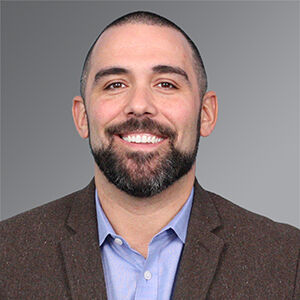


In the 14th episode of Talkin’ Talent, Sam sits down with Tobey Wyatt, founder of Motherlode Consulting, as she shares how her unique career journey led her to offering “ops in a box” business operations services to support CEOs and leadership teams. Her trial-and-error approach, from starting a greeting card company as a child, to obtaining a degree as a high school math teacher, helped her uncover her passion for mentorship and helping others succeed in business. Unable to find a teaching job, she pivoted into business operations roles at several companies before starting Motherlode in 2021. Through her diverse professional experiences, Tobey recognized a need to help companies with 50 to 200 employees with operations, human resources, change management and scaling.
This episode covers:
- Key milestones in Tobey’s career and how she transformed challenges into opportunities
- Operational and talent challenges small and medium-sized companies may face as they scale
- Indicators businesses may benefit from operational consulting
- How fractional operational expertise can help CEOs reimagine human resources, implement organizational changes and handle transitions
Discover Cherry Bekaert’s Recruiting and Staffing Services.
View All Talkin' Talent Podcasts
Hope you enjoy the 14th episode of Talking Talent. We are coming to you monthly and have some really fun stuff in store for the future. This episode features Toby Wyatt, who has recently started a new venture and her own company, Motherload Consulting, where she does fractional work in a C-suite capacity. We will talk about her background, how she decided to start her own business, plus some advice for small business leaders as they change and grow.
HOST: SAM
All right. Well, hello, everyone. Thank you for joining us for what is now the 14th episode of Talking Talent. We are excited to be coming to you monthly throughout all of 2024. I know there were some blips on the radar in 2023.
HOST: SAM
Hope you enjoyed the last episode with Lindsay McCarty, the Chief People Officer at Cherry Bekaert, talking about the acquisition and their flexible work model. That was a great one. Please tell your friends and coworkers about it. You can subscribe on Spotify. You can get it on the Port of Resources website and also the Cherry Bekaert website. We would love some feedback.
HOST: SAM
Really excited today to be joined by Toby Wyatt, who is coming to us from Chicago and wearing your Bears shirt too. I seem to always be wearing Chicago gear.
TOBY WYATT
Yeah, exciting time for the Bears considering they have the number one pick in the draft and there's a lot of talk around that. I know football is always the first love for many people in Chicago, though the Cubs and Blackhawks matter to other people. It's been a long road of disappointment recently, so we'd love just a great, decent season.
HOST: SAM
The 80s and 90s were great for the Bears and the Bulls. The Cubs and Blackhawks had ups as well. It's been some up and down recently. Thank you for joining us. We'll get into your background a bit. You can check out Toby's LinkedIn profile; we will share that. After spending a number of years in different operational roles, including some interesting roles leading to becoming the chief of staff for a team within Boeing, you started your own company in 2021, Motherload Consulting. We'll get to that in a minute.
HOST: SAM
Like most podcasts, I want to get into a little background. Either when you were growing up, was there something you always wanted to do? Or when you had your first job, tell us about something interesting you did when you were growing up and whether it correlates to what you're doing today.
TOBY WYATT
The most interesting story that correlates to the evolution of Motherload Consulting is that when I was young I would make greeting cards for friends and family for special events. I spent a lot of time making the perfect card for them, and someone suggested I should brand them, like Hallmark, with a stamp on the back.
TOBY WYATT
I ended up creating my own logo and company called Tobester Enterprises. Tobester was a nickname, and I had a little cartoon cat that I would recreate on each of the cards. It was very specific branding. When I decided to start my own company years later, I didn't settle on Motherload first. I just needed a company to do some 1099 work, so I fulfilled a childhood dream by creating Tobester Enterprises.
TOBY WYATT
When I realized I wanted to make something of the company, I went through the painful process of converting the company into a new name. I liked graphic design as a kid and always thought I'd do something creative, though I have almost no artistic talent to create something brand new. I've found different outlets for my creativity, and that's where I'm at now.
HOST: SAM
Can you imagine if the internet existed in its current form back then? In the 90s we had very rudimentary ways of doing that, so you were doing these by hand without any tools.
TOBY WYATT
Yes, you had to be creative to come up with the idea and to learn the business side of making money from it. I don't think I sold much, but it was entrepreneurial compared to many first jobs like grocery store or fast food work.
HOST: SAM
How long did that last?
TOBY WYATT
I started the branding around six or seven years old, early elementary, and I continued it in a more joking way as I got older. My first real job was McDonald's, which I can certainly relate to.
HOST: SAM
Before we get into questions, give everyone a high-level overview of your background and your perception of it so far.
TOBY WYATT
My background zigzagged through multiple things, which is common for people who identify as generalists. In late high school I was a personal assistant. I worked at SafeLite AutoGlass helping backend operations in their call center. I worked as a sales agent for Northwestern Mutual and then at their home office doing different roles. Those early jobs helped me identify what I liked and didn't like. Surprisingly, the internal call center at Northwestern Mutual was one of the best jobs I've ever had because it made my brain come alive.
TOBY WYATT
I got a degree to be a high school math teacher and graduated in 2010 when job opportunities were scarce. I fell back on old roots to be an executive assistant and grew into VP of operations at a small scaling organization, where I cut my teeth in operations. From there I moved to Boeing within HR as a chief of staff and had a brief stint at USAA before beginning Motherload in earnest.
HOST: SAM
Going from thinking you'd be a math teacher to working at Boeing is a big jump. My parents were both teachers, and they always wondered why I moved jobs a lot. Did you miss teaching? Is that something you might do in the future?
TOBY WYATT
I love one-on-one tutoring more than a classroom setting. At the call center I was training salespeople, which was mentorship and coaching. I enjoy digging into knowledge gaps, and I do that work now with CEOs—mentoring and giving feedback from an external perspective. My dream for Motherload is to grow big enough to create an apprenticeship program to take people with raw talent and desire to be generalists in business operations from basic education to higher-paying operations roles. Exposure is what matters, not degrees.
HOST: SAM
What pushed you to leave the corporate world and start Motherload? First, tell us what Motherload does.
TOBY WYATT
I've pulled back from the term consulting because it gives the wrong impression. The company name is Motherload, and I treat it more like an agency. I'm building "ops in a box": business operations that cover HR, IT, marketing, finance—areas that run the business rather than what the business does. A BizOps generalist ensures these functions run in an integrated fashion.
TOBY WYATT
There are specialists you call when needed, but a generalist can ensure coordination. My depth is in HR, so I implement HR practices at small businesses and do disruption work: I identify what's working and what's not, break things down, rebuild healthy processes, and then hand off execution to a more junior operator I continue to oversee. That gives companies an affordable operator for day-to-day work and retains me for high-level strategy, roadblocks, and pivots so they can move faster.
TOBY WYATT
I never saw myself as an entrepreneur. I thought I supported great ideas rather than having them. The catalyst included security concerns: I had been the main earner for my family and believed climbing the corporate ladder was the path. In corporate spaces I was continually told no to ideas I thought could help, and being laid off twice in two years shook my belief that salaried roles were secure.
TOBY WYATT
After the second layoff, during job search interviews I realized I would likely get frustrated with a new role after a few months. I had support from a program through On Deck and from family to try something new. I was lucky to land my first client within weeks, which opened runway to pursue Motherload for the rest of the year.
HOST: SAM
The pandemic was disruptive in many ways, exposing issues in small to mid-sized companies and accelerating fractional work. There's a growing need for fractional operators and second-in-command types.
TOBY WYATT
Fractional roles are becoming more popular and necessary. Many people are good as the number two—helping founders execute ideas rather than being the founder. I often have ideas I won't implement alone, but I can support someone who will.
HOST: SAM
What high-level advice do you have for leaders deciding whether to engage someone like you or go another direction? What indicators should they look for?
TOBY WYATT
Operations is amorphous; ask five people and you'll get five definitions, which makes it hard for outsiders to understand. Operations is also often devalued. Operators—chiefs of staff, VPs of operations, directors, office managers—tend not to recognize their value or have it recognized by others. We enable people to focus on work that only they can do and where they're most productive.
TOBY WYATT
Markers that indicate a company should turn to someone like me include: leaders who are frustrated to go to work and are dragged into passionless operational tasks; companies that want to scale but everything relies on one person; and major business transitions like exits or pivots. Those are times when stable, simplified operational processes and strategic advice are necessary.
TOBY WYATT
Many small businesses don't need full-time HR. Outsourced HR can be useful but may never know the company well. A fractional or insourced partner who knows the organization can recommend performance management and recruiting from an educated standpoint.
HOST: SAM
When you say small business, what do you consider small?
TOBY WYATT
I view small as organizations under 25 people, industry agnostic for B2B companies with an office or remote office setup. To justify the expense of bringing on talent, those companies usually have at least $1.5 to $2 million in revenue. I'm working on solutions to reach smaller companies earlier because embedding good practices early is important.
HOST: SAM
Small business leaders often view HR and operations as overhead until they reach 25 or 50 employees and problems pile up. How do you handle founders who resist operational investment?
TOBY WYATT
I work with leaders who sometimes push back but are ultimately open. For example, a 50-person company might want to hire a chief people officer for the prestige, but they likely can't afford that level. They need a hands-on operator. I help clients determine appropriate levels for hires and when to bring someone in-house versus continuing fractional support.
TOBY WYATT
Fractional options allow for a 10-hour-a-month people officer plus more executional hours from junior operators. The professional market and gig economy are merging, enabling access to the right talent for the right time and budget.
HOST: SAM
Titles are shifting from human resources to people-focused roles, which makes sense.
TOBY WYATT
HR doesn't have to be impeding or cookie-cutter. Beyond legal risk management, HR should support people, create the right culture, ensure employees feel engaged, and give good feedback. Leaders who avoid HR may fall into destructive practices, so even fractional help can be critical.
HOST: SAM
Any specific HR advice for companies in the 50 to 200 range that are creating HR manager, HR director, or VP-level roles?
TOBY WYATT
Implement metrics and performance management, define a communication strategy, and iterate constantly. These practices become muscle memory, but if you never build those muscles, initial attempts will fail and get abandoned. The smaller you start these practices, the easier scaling becomes.
TOBY WYATT
Change management is vital. Someone may know their subject matter, but if they don't know how to drive adoption, break down change into manageable steps, and get people behind it, you'll run into fatigue and tension between groups. You can't shove changes at people and expect success.
HOST: SAM
This is fascinating. We could go on for a long time. We'd love to do this again in a year and hear how things are going. Anything else you want to share?
TOBY WYATT
If you're listening and think some of this would be valuable, you can find me on LinkedIn. The show notes will have the link. It's my name, Toby Wyatt. From there you can book an appointment to discuss your problem and see if someone like me is the right answer, or I can connect you to a network of other fractional operators who might be the right fit.
HOST: SAM
That sounds amazing. Thank you, Toby. We'll talk to you soon.
TOBY WYATT
Thanks, Sam.