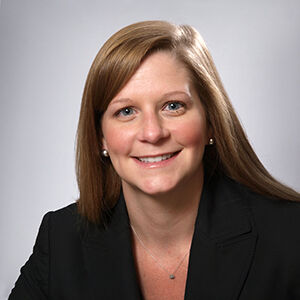
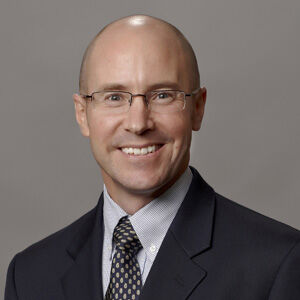
In this episode of Cherry Bekaert’s GovCon Podcast, Brynn McNeil and Craig Hunter both Assurance Partners in Cherry Bekaert’s Government Contracting Industry practice, discuss revenue recognition for government contractors. Listen to learn more about:
- The five steps for recognizing revenue under Accounting Standards Codification (ASC) 606
- Understanding how costs drive revenue
- Common errors in recording revenue
- Best practices for government contractors regarding processes and controls for recording revenue
Cherry Bekaert’s team of government contracting consultants have significant experience in navigating the SBA 8(a) business development program and can assist your business with the best accounting practices. If you have any questions specific to your situation, our government contracting consultants are available to discuss your situation with you.
View All Government Contracting Podcasts
BREN MCNEIL: Welcome to the Cherry Bekaert Government Contracting podcast. My name is Bren Mcneil, and I am an audit partner focusing on serving government contractors within our Professional Services Industry Group.
BREN MCNEIL: Joining me today is Craig Hunter, a fellow audit partner in our Professional Services Group who also focuses on serving government contractors. Today, we will focus on revenue recognition.
BREN MCNEIL: We hope you will gain a better understanding of the overall guidance for revenue recognition, common errors, and best practices that government contractors should have in place. Craig, would you kick us off by outlining the guidance and the rules we need to follow?
CRAIG HUNTER: Absolutely, Bren. We will start with a high-level refresher of the revenue recognition standard, ASC 606.
CRAIG HUNTER: The ASC 606 methodology requires us to follow five steps. We will go through each of those briefly.
CRAIG HUNTER: The first step is to identify the contract. This requires identifying the approval and rights of both parties, the payment terms, the commercial substance, and the probability of collecting the billed amounts.
CRAIG HUNTER: The second step is to identify the performance obligations in the contract. A performance obligation is a distinct good or service or a series of distinct goods or services.
CRAIG HUNTER: An important term here is "distinct." If a customer can benefit from a promised good or service on its own or by combining it with other available resources, it is determined to be distinct.
CRAIG HUNTER: An example is a contract for software sales, implementation, and ongoing support. You must look at each obligation and determine whether it is distinct or should be bundled together.
CRAIG HUNTER: The third step is to determine the contract price. This is generally straightforward except for the concept of variable consideration.
CRAIG HUNTER: Variable consideration includes award fees, performance and cost target incentives, and expense reimbursements. The standard requires including this in the transaction price only to the extent that it is probable a significant reversal of revenue will not occur.
CRAIG HUNTER: The fourth step is to allocate that price to the various distinct performance obligations.
CRAIG HUNTER: The fifth step is to recognize revenue when the underlying performance obligation is satisfied. This can be recorded over time or at a point in time.
CRAIG HUNTER: For revenue to be recorded over time, one of three criteria must be met. The first is that the customer receives and consumes the benefits as they are performed, such as hourly program support.
CRAIG HUNTER: The second criteria is when the entity creates an asset that the customer controls, such as building a structure on the customer's site.
CRAIG HUNTER: The third criteria is when the company creates an asset with no alternative use and the entity has an enforceable right to bill and collect.
CRAIG HUNTER: Government contracts are generally governed by the FAR, which allows the government to terminate a contract at any time. FAR subpart 49.2 addresses principles for determining settlement amounts for fixed-price contracts terminated for convenience.
CRAIG HUNTER: These contract terms allow you to bill for all costs incurred plus an element of profit. This provision ensures the company has an enforceable right to bill and collect.
CRAIG HUNTER: Revenue recorded over time is determined by either an output or an input method. Output methods involve units produced or delivered, while input methods rely on efforts like labor hours or costs incurred to date.
CRAIG HUNTER: Revenue at a point in time takes place if none of those three factors are in place. These are the five factors to consider for every contract you undertake.
BREN MCNEIL: Now that we have the basis for revenue recognition guidance, let's think specifically about government contractors. Generally, we see that many companies are service-driven rather than focused on manufacturing inventory.
BREN MCNEIL: For a service-based firm, the revenue is driven by the underlying costs. Direct labor is a key component of revenue recognition because it is a significant cost to the company.
BREN MCNEIL: It is essential to have strong timekeeping and labor controls in place. This system ensures you are properly charging time and that employees are properly paid, which means revenue is recorded accurately.
BREN MCNEIL: Other direct costs are also significant, including travel, subcontractor labor, or materials. You must ensure proper controls are in place to charge these direct costs to your contracts, as they drive your revenue recognition.
CRAIG HUNTER: That is exactly right, Bren. If we look at revenue recognition for specific contract types, we start with Time and Materials (T&M).
CRAIG HUNTER: For T&M contracts, revenue is the hours expended at the agreed contractual rates. These rates should be fully burdened.
CRAIG HUNTER: If the contract allows for it, make sure you are billing a material handling rate. Do not give that up to the government.
CRAIG HUNTER: For cost-reimbursable contracts, you bill costs plus an allocation of indirect costs on a regular basis. These indirect costs are a function of your provisional or approved rates.
CRAIG HUNTER: On fixed-price contracts, revenue is generally a function of costs. This is calculated as costs incurred to date as a percentage of total costs, multiplied by the overall contract value.
CRAIG HUNTER: It is vital to have all underlying costs recorded. If they are not recorded, you will not record the related revenue.
BREN MCNEIL: We do see several common errors as we go through these contract types. For T&M contracts, although recognition is straightforward, we often see issues with incorrect rates.
BREN MCNEIL: This happens frequently in option years when companies fail to charge the new, correct rates. We also see issues where time sheets are not properly recorded or approved.
BREN MCNEIL: Regarding cost-type work, indirect rates are a key component. We see many companies that do not monitor these rates throughout the year.
BREN MCNEIL: While companies recognize revenue during the year at provisional rates, they must look at actual rates at year-end. A true-up is necessary to ensure they have not overrun or underrun the revenue recognition.
BREN MCNEIL: Some contracts also have rate ceilings. You must ensure you have not recorded revenue in excess of what is allowed by the contract.
BREN MCNEIL: We often find these issues when reviewing unbilled contract assets during an audit. Properly reconciling these accounts can help clients identify errors in their cost-type work.
BREN MCNEIL: On fixed-price work, the most common errors occur when project managers do not perform accurate estimates to complete. If they do not capture all costs, it will negatively impact the revenue recognized.
BREN MCNEIL: Another issue involves forward losses under ASC 606. If a company anticipates future losses on a contract, the guidance requires that a provision for that loss be accrued at year-end.
CRAIG HUNTER: To avoid these pitfalls, one best practice is correct system setup. Whether using Deltek Costpoint, Unanet, or QuickBooks, you need someone experienced to ensure costs are accumulated and invoicing is appropriate.
BREN MCNEIL: The timekeeping process is also critical. Since labor is traditionally the largest cost for these companies, you must have an appropriate system and strong controls over time sheets and pay rates.
CRAIG HUNTER: Another best practice is properly documenting your contracts. While many government contracts are well-documented, we see instances where companies rely on verbal notices to extend the period of performance.
CRAIG HUNTER: Verbal agreements may be challenged later, especially if there is turnover in the contracting office. Always get these agreements in writing to support your billings and contract terms.
BREN MCNEIL: For those doing cost-type work, I suggest reviewing your indirect rate structure. You should ensure you are optimizing that structure to be as advantageous as possible for the work you perform.
CRAIG HUNTER: Companies should also maintain a robust and routine monthly financial statement closing process. Reconciling all accounts, including unbilled contract assets and liabilities, is crucial.
CRAIG HUNTER: As auditors, we often find issues in unbilled accounts that have not been reviewed for a long time. Adjusting these accounts usually affects revenue, and no one likes surprises on the P&L.
BREN MCNEIL: Having regular communication with your CPA to ensure revenue recognition is appropriate is always a good strategy. We are always willing to talk to our clients about these matters.
BREN MCNEIL: Craig, thank you for joining me today. Cherry Bekaert produces many podcasts within the Professional Services industry.
BREN MCNEIL: We hope you will join us for future episodes. All of our podcasts are posted on cb.com.
BREN MCNEIL: If you have questions or needs, please feel free to reach out to us. Thank you for joining us today.