

Nonprofit organizations, from social services to trade associations and charter schools, play an essential role in supporting our communities. But these organizations often face several challenges and restrictions when it comes to fulfilling their missions. Throughout 2024, not-for-profit (NFP) organizations will have many opportunities to increase impact and streamline operations.
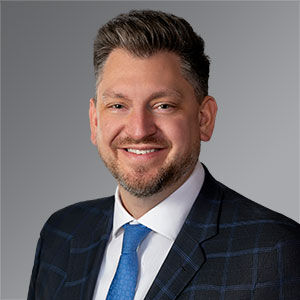
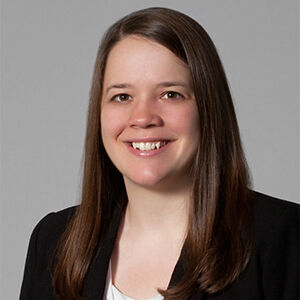
Matthew Socha, Not-for-Profit Practice Leader, hosted John Fedus, Partner, and Amelia Crawford, Director, to look into their crystal balls and predict the top trends not-for-profits may experience this year. They explore a variety of themes, issues and opportunities that organizations face.
The first of our NFP podcasts for 2024, this episode covers:
- Managing the lack of resources available to NFPs
- Remote work
- NFPs’ investment in technology
- Improving donor experience
- Collaboration with other nonprofits
- Artificial intelligence (AI) for NFPs
Cherry Bekaert Can Guide You Forward
Cherry Bekaert has a dedicated not-for-profit team with extensive experience in the industry. Many of our team members serve in a voluntary capacity on boards and give of their resources for the causes they feel strongly about. We have a clear sense of your priorities, goals and objectives and look forward to the opportunity to support your organization and mission.
View All Not-for-Profit Podcasts
HOST: MATTHEW SOCHA: Welcome and thanks for listening to Cherry Bekaert's Not-for-Profit Podcast Series. In each episode we hear from the best in the business on the latest challenges, trends, and opportunities affecting Not-for-Profit organizations and educational institutions. I'm Matthew Socha, leader of Cherry Bekaert's Not-for-Profit Industry Practice.
HOST: MATTHEW SOCHA: Welcome to this edition of the Not-for-Profit Podcast Series. I have two guests with me today, John Fedus and Amelia Crawford, to help kick off our 2024 podcast series. We'll consult our crystal balls to predict some of the top trends in the Not-for-Profit industry for 2024.
HOST: MATTHEW SOCHA: John and Amelia, please introduce yourselves and give a little background on the market you serve and the types of Not-for-Profits you work with.
JOHN FEDUS: Good morning. I'm John Fedus, a partner in the Chicago office of Cherry Bekaert. I lead the Not-for-Profit team in the Chicago area and have been in public accounting for many years.
JOHN FEDUS: I work mainly with several nonprofit niches: social services, associations, higher education, charter schools, religious organizations, and private and public foundations. I'm looking forward to discussing key topics and trends that will impact Not-for-Profits this year.
AMELIA CRAWFORD: I'm Amelia Crawford in the Raleigh-Durham market. I've worked in the Not-for-Profit sector for a significant time and, similar to John, work with many social service and religious organizations in the area. I'm excited to discuss the trends we're seeing.
HOST: MATTHEW SOCHA: Here's the format. Each of us will introduce one or two top trends for 2024 for Not-for-Profits. We'll go round-robin: introduce the topic, explain why it's important for 2024, and then react to each other's ideas. John, I'll put you in the hot seat first. What's your top trend or two for 2024?
JOHN FEDUS: One of the most maddening things for Not-for-Profits right now is finding good resources to work with them. The number one question I get from clients is: How can I attract professionals to work for our organization?
JOHN FEDUS: Challenges include meeting salary and benefits demands and accommodating remote work. Many nonprofits are pushing hard on social media and LinkedIn to find new staff, but the number-one way clients are dealing with this issue is outsourcing.
JOHN FEDUS: Outsourcing has become the most prevalent approach because of the frustration of hiring someone who leaves in three to six months. Using an outsourced firm provides continuity and a team that knows your business, even if individual team members transition.
JOHN FEDUS: On the remote work side, this will play out over the next several years. Many nonprofits are worried about organizational culture. About a quarter of my nonprofit clients are fully remote; others come in one to three days a week. Two to three days in the office seems most common, but younger professionals want more remote flexibility to avoid commutes.
HOST: MATTHEW SOCHA: I couldn't agree more. Several clients have sold their office buildings coming out of the pandemic. As audit partner, I'm dealing with outsourced accountants frequently during audit fieldwork when the original staff are no longer there. We're also getting many inquiries about outsourcing services.
HOST: MATTHEW SOCHA: Mecklenburg County, where Charlotte, North Carolina, sits, announced a return to five days a week in the office starting this July. It will be interesting to see the trickle-down effect on the employment market and how organizations respond.
HOST: MATTHEW SOCHA: Amelia, you're up next. What's one of your top trends?
AMELIA CRAWFORD: This ties into what John discussed. I think nonprofits will invest more in technology. Many organizations have balanced where to spend money, but with remote work and resource challenges, they are reaching a point where they must invest in technology to use staff time efficiently.
AMELIA CRAWFORD: I'm seeing more nonprofits look at better platforms designed for Not-for-Profits rather than piecing together Excel spreadsheets. Tracking contributions and restrictions outside core systems is inefficient, especially with limited personnel and remote work.
JOHN FEDUS: New financial reporting systems will be critical to success, but nonprofits must manage turnover and integration issues. Teams may learn a new system one year, and subsequent staff changes or added modules can create integration challenges.
JOHN FEDUS: There are many tech-based groups looking to work with nonprofits, especially in markets like Raleigh-Durham with a strong tech focus. These groups may help through grants, coding support, or nonprofit-focused solutions, which could be valuable as younger generations push organizations to demonstrate impact.
HOST: MATTHEW SOCHA: I agree. Technology does not solve all problems; the human element, processes, and training must accompany any platform implementation. But many organizations are actively searching for new platforms.
HOST: MATTHEW SOCHA: My trend focuses on enhancing the donor's digital contribution experience. Nonprofits need seamless online giving experiences coupled with digital marketing and fundraising initiatives.
HOST: MATTHEW SOCHA: I'm surprised that in many cases it still takes 10 to 15 minutes to complete a donation: multiple screens, credit card or bank info, creating a login, to make a $100 contribution. Donors abandon gifts when the process is too long.
HOST: MATTHEW SOCHA: Nonprofits must adapt to engage millennial and Gen Z donors by creating mobile-responsive donation pages and offering multiple payment options like Venmo, Apple Pay, Google Pay, and PayPal. The interface should be simple and intuitive.
HOST: MATTHEW SOCHA: Equally important is maintaining the emotional connection with donors through storytelling, visuals, and clear calls to action so the donation process remains emotionally rewarding.
JOHN FEDUS: If you don't adapt, you'll leave money on the table. Keep the donation process as easy as possible, including QR codes at events and one-click donation flows. Most people no longer carry cash or checks.
HOST: MATTHEW SOCHA: John, you had two trends in one. Amelia, another trend for 2024?
AMELIA CRAWFORD: I'm noticing more collaboration among nonprofits with overlapping missions, driven by scarce resources and competition for grant funding and large donations. Collaboration can take many forms: partnering for events, pooling donors, or combining operations.
AMELIA CRAWFORD: Nonprofits can offset personnel and technology costs by working together or merging. Combining resources can increase efficiency and impact.
JOHN FEDUS: I've seen this trend across segments: healthcare, membership organizations, and others. Organizations covering adjacent geographic areas with similar missions are considering joint ventures or mergers to achieve economies of scale.
AMELIA CRAWFORD: Mergers and collaborations are increasing, though board resistance to giving up control is often the hardest part. The organizations that do merge usually reap significant benefits.
HOST: MATTHEW SOCHA: My last top trend is artificial intelligence. There's a saying: AI won't replace people, but the people who use AI will replace those who don't. That applies to Not-for-Profits.
HOST: MATTHEW SOCHA: Organizations that use AI in innovative ways will have a competitive advantage. AI has many use cases in fundraising, membership, accounting, marketing, governance, program delivery, and donor relations.
HOST: MATTHEW SOCHA: There are low-cost, low-barrier ways to start using AI now, and Not-for-Profits will likely adopt these tools in full force in 2024 and beyond. Integrating AI is an important strategy to advance organizational missions.
HOST: MATTHEW SOCHA: Boards must understand AI, its use cases, and deployment. When using AI tools such as chatbots, organizations must address ethical considerations, donor trust, empathy, and authenticity.
JOHN FEDUS: AI ties into the other trends: resource scarcity, the need for technology, and donor engagement. It can help address those challenges and should be considered alongside other investments.
AMELIA CRAWFORD: AI sits alongside other top trends. Many listeners may not know all the ways AI can help, so a future episode diving deeper into specific AI applications for Not-for-Profits would be valuable.
HOST: MATTHEW SOCHA: This has been a great discussion. In the spirit of AI, I found an AI chatbot that creates dad jokes and used it to generate one based on today's topics. Do you want to hear it?
JOHN FEDUS: Yes.
AMELIA CRAWFORD: Absolutely.
HOST: MATTHEW SOCHA: Did you hear about the bakery that started a charity organization dedicated to helping people with bad puns? They're hoping to raise some dough while spreading awareness for their cause.
HOST: MATTHEW SOCHA: Again, John and Amelia, thank you for joining me today. Thanks to the listeners, and we'll see you next time. This is Matthew. I hope you enjoyed this episode and look forward to our next one. Don't forget to subscribe.