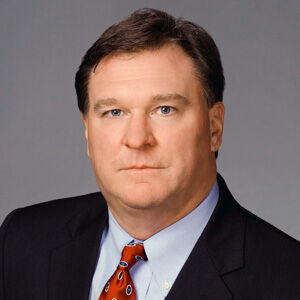
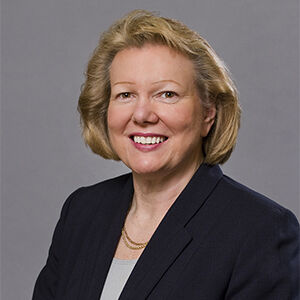
The latest version of the Build Back Better bill was released by the U.S. House of Representatives on November 5, 2021. The bill includes significant spending initiatives which are paid for, in part, by proposed tax provisions that impact companies operating outside the United States. Tax Beat hosts, Brooks and Sarah, invite Cherry Bekaert’s International Tax specialists, Brian Dill and Michael Cornett, to highlight the proposed provisions impacting income subject to GILTI and FDII tax rates. They also address other proposed provisions including changes to foreign tax credits and BEAT. This is timely information as companies evaluate changes to their supply chains and watch the movement towards a global minimum tax.
A companion Tax Beat podcast highlights the proposed tax provisions that can impact businesses and individual taxpayers.
Chapter Marks:
- 7:14 — Proposed provisions impacting GILTI and FDII
- 11:18 — Changes to the foreign tax credit regime
- 13:34 — Other provisions in and out of the bill
- 18:59 — State of global minimum tax rate
- 26:42 — Recommendations for planning
Related Insights:
View All Tax Beat Podcasts
HOST: Welcome to the Cherry Bekaert Tax Beat, a conversation about tax that matters. Welcome to this edition of the Cherry Bekaert Tax Beat podcast.
HOST: Today is November 10, 2021, and we will be discussing the international tax provisions of the Build Back Better Act, also sometimes referred to as the Social Infrastructure Bill. Specifically, we are going to talk about the language in the latest November 5th version coming out of the House.
HOST: First, let me introduce my colleagues for today’s podcast. Brian?
BRIAN DILL: I head up the International Tax practices for Cherry Bekaert, and I am based in the Atlanta office.
HOST: Mike?
MIKE CORNETTE: I am responsible for the international consulting practice underneath Brian, and I live in St. Louis.
HOST: And as always, Sarah.
SARAH MCGREGOR: This is Sarah, once again calling in from Greenville, South Carolina.
HOST: My name is Brooks Nelson. I am a partner out of Richmond, Virginia, but today I am looking out at the lovely sunny beach just outside St. Augustine, Florida. I think I have all three of you beat.
HOST: Sarah McGregor, how is life treating you today?
SARAH MCGREGOR: Life is good. This is a year-end planning week for our firm.
SARAH MCGREGOR: Everyone is focused on our clients, trying to touch base and work with them to figure out where 2021 is going to end and how to start well into 2022.
HOST: Let's jump to it. This podcast will be a companion to our other podcast recorded yesterday, which featured the general business and individual provisions.
HOST: Today, we are narrowly focused on the global and international tax provisions. As a broad reminder, we are not ignoring the fact that 75% of these bills deal with spending and infrastructure.
HOST: We are talking about the language that incorporates the tax raising the revenue to fund these deals. Since this is a tax podcast, we are talking about tax.
HOST: We have been following these bills along a long road, starting way back with President Biden’s campaign plans, the Greenbooks, and multiple versions of language. Sarah, why don't you set the table and talk about exactly where we are in this process?
SARAH MCGREGOR: We received the first legislative draft language in September when the House Ways and Means Committee released their approved version of the Build Back Better Act.
SARAH MCGREGOR: At the end of October, another version was released after House members had time to make adjustments and amendments. Less than a week later, on November 5th, more changes were made.
SARAH MCGREGOR: That is the version we are talking about today. The bill currently sits with the Rules Committee and is waiting for scoring from the CBO before a vote by the full House.
SARAH MCGREGOR: It will then go to the Senate, which can make further amendments or come up with its own version. If they make changes, it will have to go to reconciliation or back to the House to vote on the Senate changes.
SARAH MCGREGOR: We are still a long way from a finished version. Everyone hopes something will be accomplished before the end of this calendar year, but we will wait and see what the next version looks like.
HOST: It is safe to say this will not be the final version of the bill. We have already seen protests regarding the increase in the SALT cap, and the chances of that passing the Senate with such a small margin seem slim.
HOST: However, international tax has been the focus from the very beginning. It is the one area where everyone seems to agree we can raise revenue without complaints from either side of the aisle.
HOST: Brian, what are your overall impressions of where we stand now?
BRIAN DILL: The latest modifications in the Build Back Better Act are fairly minor compared to the earlier Ways and Means version. However, international and corporate taxes continue to pay for this infrastructure bill.
BRIAN DILL: Based on November 4th estimates, approximately $815 billion of the $1.5 trillion in the revenue-raising section comes from international and corporate tax. Companies with multinational operations should get ready for that.
BRIAN DILL: Rates are not changing on the international side, but they are using various provisions that will be very difficult to administer. I believe the government will be resource-constrained when trying to implement these.
BRIAN DILL: The level of complexity in these provisions is very high. It remains to be seen how companies with multinational operations will be able to manage these complex and time-consuming provisions.
HOST: Mike, let's jump into that complexity. Earlier proposals would have eliminated FDII and modified GILTI. What is in the current bill for these?
MIKE CORNETTE: In the current bill, FDII and GILTI are still available to taxpayers, but they have made some changes. On the FDII side, they have reduced the Section 250 deduction to 24.8%, which increases the effective tax rate on FDII income to 15.8%.
MIKE CORNETTE: For GILTI, they reduced the deduction from 50% to 28.5%, which raises the effective rate on the GILTI inclusion from 10.5% to 15%. They also reduced the exemption for Qualified Business Asset Investment (QBAI) from 10% to 5%.
MIKE CORNETTE: The biggest change impacting both is the foreign tax credit calculation and the GILTI calculations. These will now be performed on a country-by-country basis.
MIKE CORNETTE: Previously, the GILTI calculation was an aggregated group calculation. Now, you must calculate GILTI and associated foreign tax credits on a country-by-country basis.
MIKE CORNETTE: Regarding GILTI, the haircut on foreign tax credits will be 5% in this proposal, down from 20%. This provides a slight potential benefit.
MIKE CORNETTE: Most of these changes have a delayed effective date for tax years beginning after December 31, 2022. If this passes at the end of the year, you will have at least a year to start modeling and adjusting for the information required.
SARAH MCGREGOR: It sounds like we still have tax rates on FDII income and GILTI that are less than the 21% corporate rate, but higher than what we have been paying. Brian, are these changes helpful, harmful, or just better than expected?
BRIAN DILL: The changes in the Build Back Better Act are helpful compared to the Ways and Means version. In earlier versions, GILTI would have been very close to 21%.
BRIAN DILL: The deferral to 2023 is also a welcome sight, as we did not know how people would be able to implement these timely. However, the CBO is yet to score this.
BRIAN DILL: I would not be surprised if, after CBO scoring, we have to go back to an earlier year. While this was a welcome sight, we must wait for the scoring to see if we return to a 2022 effective date.
HOST: Brian, I want to circle back to the changes in the foreign tax credit. Could you elaborate on those?
BRIAN DILL: Traditionally, if you were operating in multiple countries, you were able to consolidate those income streams and credits on a single aggregated basis.
BRIAN DILL: In this new proposal, country-by-country requirements for both GILTI and foreign tax credits stratify the credit streams. If you have losses in one country, they will not be able to offset income in another country.
BRIAN DILL: If you have higher credits in one country, they will not offset income generated from another country. This stratification is essentially a hidden revenue raise.
BRIAN DILL: There is no real benefit for the taxpayer when you stratify it. Additionally, tracking all of this information will be difficult.
BRIAN DILL: We envision reporting becoming even more complex. Form 5471 already has 30 pages; adding pages to report every country’s income and tax pool information is a significant concern for timely compliance.
HOST: Mike, there are some changes to interest expense as well affecting international organizations?
MIKE CORNETTE: In 2017, Section 163(j) was added to create a limitation. This current bill introduces Section 163(n), which is another interest expense limitation.
MIKE CORNETTE: This does not replace Section 163(j). The two will work in tandem, and whichever is more restrictive will apply.
MIKE CORNETTE: Section 163(n) limits interest expense for a U.S. company that is a member of an international financial reporting group. It looks at a company that is part of a larger group filing consolidated financial statements to determine the appropriate U.S. share of group-wide interest.
MIKE CORNETTE: The most recent changes loosened this slightly. Previously, any disallowed interest expense was subject to a five-year carryforward.
MIKE CORNETTE: The latest version allows an indefinite carryforward, similar to how Section 163(j) works. This does not apply to S corporations or certain small businesses.
MIKE CORNETTE: They are definitely trying to tighten deductibility and ensure the U.S. is only deducting its fair share of interest expense.
HOST: Brian, why don't you expound on SHIELD versus BEAT?
BRIAN DILL: The Biden administration has supported the idea of SHIELD, which forces U.S. companies to have non-deductible payments to parties in jurisdictions with a rate lower than 15%.
BRIAN DILL: Recently, the OECD and the G7 agreed on a global minimum tax of 15% after Ireland agreed to join. However, this still must be implemented on a country-by-country basis by each country's legislature.
BRIAN DILL: Because of that, the Biden administration seems to have foregone SHIELD in the Build Back Better Act. Instead, we have modified BEAT, which stands for Base Erosion and Anti-abuse Tax.
BRIAN DILL: We are seeing that BEAT rates will continue to go up. Most concerning is that for 2025 and beyond, the rates are raised to 18%.
BRIAN DILL: We do not know how that will align with a global minimum tax of 15%. You could be making payments to countries in alignment with the global agreement but still be subject to BEAT.
SARAH MCGREGOR: Incentives for onshoring jobs and disincentives for offshoring were in original proposals this summer. Were those dropped or were new things added?
BRIAN DILL: The onshoring and offshoring job provisions seem to have been dropped, at least in the House and Senate versions. We will have to see what progressives like Bernie Sanders want to push, as those were core pillars.
BRIAN DILL: Also, it appears that the IC-DISC export subsidies and advantages are still in place and are not currently in any of the proposals, which is very welcome.
HOST: Moving to the bigger picture, we have seen world leaders agree on a 15% tax. Yet, with this bill, we are sticking with a 21% corporate tax rate for the most part, while adding a 15% minimum tax for very large corporations. Mike, how does this work?
MIKE CORNETTE: The U.S. pushed for this 15% minimum rate, but that is a floor, not a ceiling. The U.S. has decided to go higher with the 21% rate.
MIKE CORNETTE: Companies are starting to ask why we stay at 21% if 15% is the minimum, as other foreign countries may reduce their rates to 15%. It will be interesting to see how this dynamic plays out since other countries must still legislate these changes.
HOST: Do you see any competitive disadvantage as this shakes out?
MIKE CORNETTE: There has always been a race to the bottom in global corporate tax. Ireland negotiated so that the 15% rate only applies to certain large companies, while others can stay at 12.5%.
MIKE CORNETTE: I think you will still see rate differentials that countries use to attract business. The OECD is also trying to allocate profits based on activity rather than just rates.
MIKE CORNETTE: Until you get a uniform rate in every country, companies will always look for lower-tax jurisdictions if they have the resources.
HOST: Does that mean transfer pricing becomes even more important as taxpayers look for favorable allocation of income?
MIKE CORNETTE: It will definitely put more pressure on transfer pricing and identifying where activities take place. This bill did not tighten the inversion rules.
MIKE CORNETTE: With the U.S. at 21% and a global minimum of 15%, it will be interesting to see if there is an uptick in inversion transactions. U.S. companies might look offshore to secure that 15% rate.
SARAH MCGREGOR: Brian, was the increase in the FDII rate to 15.8% an attempt to get that rate up to the global minimum floor?
BRIAN DILL: Yes, that is absolutely right. They tried to be in line with the G7 agreement on a 15% global rate.
SARAH MCGREGOR: Regarding global supply chains, how is this impacting multinational transfer pricing and tax planning?
BRIAN DILL: While the U.S. discusses global minimum taxes, the clear policy goal is to onshore jobs. That means displacing jobs in other countries.
BRIAN DILL: The idea that there will not be competition is not very honest. We have supply chain disruptions because of the pandemic and proposals wanting companies to onshore jobs.
BRIAN DILL: When you change your supply chain, the pricing at every point becomes very complicated to adjust. This is the opposite of tax simplification. It is moving straight to differential equations.
HOST: What ideas or actions should global companies consider right now?
MIKE CORNETTE: It is critical to start modeling the impact of moving to a country-by-country basis for foreign tax credits and GILTI. Even if it is delayed, you need to know if you have the necessary information.
MIKE CORNETTE: Modeling will help you make decisions for upcoming years, such as whether to shift business from a certain country to ensure losses or credits are fully utilized.
HOST: Cherry Bekaert happens to be offering those modeling services. Brian, what are your thoughts on year-end planning?
BRIAN DILL: You cannot address this soon enough. This impacts the fundamentals of your business, from your supply chain to your legal entity structure and intercompany pricing.
BRIAN DILL: These changes are not a flip of a switch. You need to focus on how a country-by-country approach for GILTI and foreign tax credits will impact where you pay higher taxes and where onshoring makes sense.
SARAH MCGREGOR: I would add the focus on the source of financing. With the continued reduction of interest expense, you must evaluate if debt financing is still the most efficient mechanism for funding operations.
HOST: The complexity of all this requires proactive planning. Even without law changes, we were already expecting significant changes to international tax reporting this year.
HOST: Any of these new provisions will further complicate compliance. Dealing with the sheer compliance of these changes will be a major issue regardless of your structure.
HOST: Thank you for listening to our discussion on the Build Back Better Act tax changes. We are not providing tax advice on this podcast.
HOST: Please consult with your tax advisor, hopefully at Cherry Bekaert, regarding your specific issues. Check out the firm’s website at cbh.com for the latest guidance on business topics.
HOST: This concludes today’s podcast. Please like, share, and subscribe. Thank you, Brian, Mike, and Sarah, and thank you to our listeners. Let's call it a day and go forth in peace.