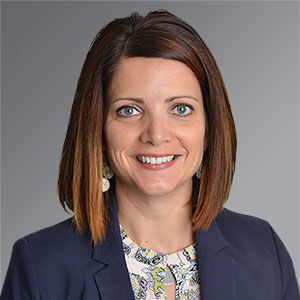


How often are technology companies truly prepared when ready for an exit or to take on new funding? Dixie McCurley sits down with investor and CEO Lauren Fernandez to get her take on the components that lead to business growth, success and eventual sale. Lauren shares the number one priority she has for assessing a company’s financial health, as well as thoughts on the future of AI and technology.
They discuss:
- Three primary areas of focus from an investor’s point of view, including the number one culprit for inaccurate documentation
- The importance of accounting practices and consistency per industry standards
- Future technology and AI in accounting
Related Insights
View All Technology Podcasts
DIXIE MCCURLEY: Hello, everyone, and thanks for tuning in to Cherry Bekaert's latest technology podcast. My name is Dixie McCurley, and I lead the firm's Client Accounting Services. I'm excited to host another episode.
DIXIE MCCURLEY: This time I'm joined by Lauren Fernandez, CEO of Full Course, an investment firm that incubates and accelerates emerging restaurant brands. Lauren, thanks so much for joining me.
LAUREN FERNANDEZ: Thank you so much for having me on today.
DIXIE MCCURLEY: The reason we wanted to have you on the podcast is to get your perspective as an investor. Much of our work is with technology companies and ultimately prepares them for an exit if that's the company's goal.
DIXIE MCCURLEY: As we're thinking about the lifecycle of a business and all the components that lead to growth, success, and a sale, what would you say are the primary areas that investors focus on the most?
LAUREN FERNANDEZ: In any investment scenario, the first thing an investor is going to look at is the P&L. We want to see the income statement, and I think that's true across many industries.
LAUREN FERNANDEZ: My best advice to anyone operating a business and looking to exit in the near future is to clean up that P&L. If you're the proprietor or founder and owner-operator, you probably have some commingling, and that's understandable, but you need to scrub the P&L for unnecessary expense.
LAUREN FERNANDEZ: As an investor, I ask: is that charge, purchase, or expense necessary to operate the business? I want a clean representation of what it takes to get the inputs in the business and produce profits.
LAUREN FERNANDEZ: If you have personal items, such as a car or an exaggerated salary, on the books, you need to step back and determine what is absolutely necessary to run the business. Those items should not live on the chart of accounts or in the profit and loss statements.
LAUREN FERNANDEZ: Often the number-one culprits I see are salary and compensation for the owner. I also see irregular distributions and expenses that are more personal in nature.
DIXIE MCCURLEY: When we review client accounting books, we often find the chart of accounts isn't structured for analysis. Many businesses have a bookkeeper mentality rather than building accounting systems an investor can analyze.
DIXIE MCCURLEY: Those businesses are often underfunded on accounting, and we end up recommending a cleanup project. Could you share how much of an investment professional accounting is and how valuable it is to the organization?
LAUREN FERNANDEZ: I'll back up a step. First, make sure you're using a chart of accounts that is standard for your industry. I see many companies with appropriate designations in the chart of accounts but inconsistent coding of invoices and expenses.
LAUREN FERNANDEZ: For example, not all paper is a food cost; some paper is an office expense. Inconsistency across operating units prevents apples-to-apples comparisons. It's not just about having the right chart of accounts; it's about consistent AR and AP recording.
LAUREN FERNANDEZ: That consistency over time is what a professional accounting firm delivers. Many startups and early-stage companies, especially those less than five years old or with sub-$3 million in EBITDA, underfund their accounting function.
LAUREN FERNANDEZ: They often scrape by with part-time bookkeepers, offshore accounting, or doing it themselves in QuickBooks. While that can be a necessary early step, professionalizing those services is worth its weight in gold.
LAUREN FERNANDEZ: Reliable data lets you trust your instincts, validate trends, and respond in a timely fashion. Garbage in, garbage out: if you don't have good inputs, regular closes, and reliable reporting, you won't make the best business decisions in real time.
LAUREN FERNANDEZ: That historical run of properly closed books and clean data is what an investor will want to see. If you're willing to pay for marketing and legal services, you should be willing to invest $2,000 to $5,000 a month for someone to run your books, and that should be a professional accounting firm.
DIXIE MCCURLEY: If the investor doesn't trust your books, they're unlikely to invest. They'll walk away from the deal.
DIXIE MCCURLEY: From a technology standpoint, what areas do private equity and VC funds consider when evaluating a potential investment?
LAUREN FERNANDEZ: We want to see a tech stack in place that is being utilized to maximum effect. There are ways to use technology at the intersection of accounting to achieve better investor confidence.
LAUREN FERNANDEZ: We look at how quickly they close their books, how quickly they can run a new report, whether we have live feeds to their accounting, and whether we can layer our dashboard on top of their feed. Ease of access and technology underpin the whole conversation.
LAUREN FERNANDEZ: AI is empowering business owners to run reports more efficiently and to machine-learn coding patterns, such as consistently classifying certain expense types. This helps make monthly closes faster.
LAUREN FERNANDEZ: Technology is enabling investors to have greater visibility and transparency into businesses with greater speed. But technology will also expose antiquated practices if the fundamentals are not in place.
LAUREN FERNANDEZ: Technology is not a silver bullet for the lack of solid accounting fundamentals. You must start with a clean chart of accounts, good accounting practices, and timely closes.
DIXIE MCCURLEY: I love how you frame accounting as the foundational linchpin. You described it as an art form, making numbers tell the story of the business.
DIXIE MCCURLEY: That ties into your second point about technology solutions. My third question is about AI and the future. I don't think AI will replace the art of the accountant; rather, accountants who use it will replace those who don't.
DIXIE MCCURLEY: From an investor's perspective, what do you think AI will do to disrupt business operations?
LAUREN FERNANDEZ: Generally, AI will augment practitioners rather than replace them. I'm an attorney, and I believe there is both science and art to analyzing risk when sitting in that seat. Accountants similarly need mastery of accounting practices and the art of applying them.
LAUREN FERNANDEZ: I discourage people from using AI-empowered software to "clean" their books or do accounting for them. I don't think we're there, and I have concerns about confidentiality.
LAUREN FERNANDEZ: Deep neural networks behind tools like ChatGPT capture searches and results and feed them back into the learning model, which can make that information non-confidential. There are serious legal considerations.
LAUREN FERNANDEZ: Many businesses consider their books and accounting practices confidential or even trade secrets. Be cautious before inputting proprietary data into AI systems, as it can become part of public or commercial datasets beyond your control.
LAUREN FERNANDEZ: There are safe ways to use AI for lower-risk projects, generating social posts or augmenting sales copy, for example. Google now surfaces AI-powered results at the top of searches. Use technology as an additive to your trusted professional team; don't view it as a replacement for necessary professional services.
DIXIE MCCURLEY: In the restaurant space, where do you see AI having the biggest impact?
LAUREN FERNANDEZ: In this inflationary period, the number-one use for AI in restaurants is measuring food costs. We cannot get to dynamic menu pricing until we truly understand full prime cost, food and labor attached to menu items.
LAUREN FERNANDEZ: For many restaurants, this starts with inventory. High-volume operations need inventory counts frequently, sometimes weekly, which is a challenge. Many restaurants still use clipboard and paper.
LAUREN FERNANDEZ: We're seeing camera-enabled AI software used in other industries and in government and DoD contracts to count inventory in real time. That technology could reduce labor for inventory and improve accuracy in understanding real-time food costs.
LAUREN FERNANDEZ: Improved cost accuracy would enable more dynamic, just-in-time inventory controls and pricing, similar to consumer packaged goods, retail, and grocery. Passing inflationary pressures through to consumers with more precise pricing is a compelling investor thesis.
DIXIE MCCURLEY: Technology companies have a wide open field of areas to develop expertise so businesses can transform with technology.
LAUREN FERNANDEZ: This is the beginning of a long process to define boundaries around AI, intellectual property, and what is machine-created versus what is human-created. We'll need legal, business, and philosophical constructs for that.
LAUREN FERNANDEZ: Part of the journey will involve abuse and misuse. Deepfakes and other issues will surface. As a society, we must determine our socio-political and philosophical boundaries for these technologies.
LAUREN FERNANDEZ: Meanwhile, developers will continue to build apps leveraging AI search engines, and the underlying models will learn and become more powerful and accurate, which raises additional concerns.
DIXIE MCCURLEY: The three primary areas investors focus on are a clean P&L, technology solutions, and future AI considerations when selecting technology partners. Lauren, thank you for joining us and sharing your insight.
DIXIE MCCURLEY: Thank you to everyone listening. Please check out our other podcast episodes from the technology team. We welcome questions about the topics discussed today, and you can find our contact information wherever you are listening.
LAUREN FERNANDEZ: Thank you. I appreciate you having me on today.