Accomplished business leaders, professionals, and community leaders are often sought out to serve on the boards of not-for-profit organizations. These organizations generally operate under a tax-exempt designation from the IRS, but that does not mean they do not file tax returns. In fact, the Form 990 asks for more information about the operations, best practices, related party activities, investments, and results of mission-oriented programs than most for-profit business tax returns do.
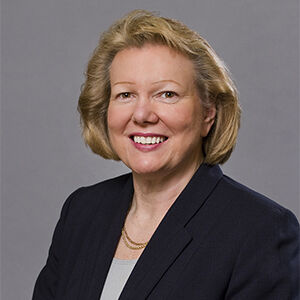
Amanda Adams, Managing Director and Not-for-Profit Tax Leader at Cherry Bekaert, provides insight into the world of Form 990 reporting. Brooks and Sarah ask Amanda to walk through the various parts of the Form 990 and highlight sections that board members should review. Amanda also points out where to spot warning signs for potential risks. She explains a few of the key questions within the Form 990 that the IRS considers as evidence of best practices for good governance of organizations. The conversation wraps up with a discussion of unrelated business taxable income and key issues facing not-for-profit organizations in 2022.
View All Tax Beat Podcasts
BROOKS NELSON: Welcome to the Cherry Bekaert Tax Beat, a conversation about tax that matters. Welcome to this edition of the Cherry Bekaert Tax Beat podcast. Today's episode is an overview of tax rules for not-for-profit organizations, aimed at being a primer for board members, particularly new board members.
Joining our discussion today is Amanda Adams, our Managing Director and leader of Tax Services for not-for-profit organizations. Hello, Amanda.
AMANDA ADAMS: Hello, everyone.
BROOKS NELSON: Where are you calling in from today, Amanda?
AMANDA ADAMS: I am calling in from Atlanta, Georgia.
BROOKS NELSON: How is the weather in Atlanta today, Amanda?
AMANDA ADAMS: The sun is starting to come out. It has been rainy the last few days, and it is getting warmer, so spring may be on its way.
BROOKS NELSON: As always, we are joined by Sarah McGregor from Greenville. Hello, Sarah.
SARAH MCGREGOR: Hello, this is Sarah. I am calling in from Greenville, South Carolina, where we are also getting all that rain that Atlanta did not use up.
We are past the March 15 deadline, so things are looking bright and cheerful. We have one more big deadline to go and lots of work to accomplish.
This is great because we get to talk to many of our individual clients. Amanda, your next deadline is May 15, the month after that?
AMANDA ADAMS: That is correct.
BROOKS NELSON: I am Brooks Nelson, a Partner, and today I am sitting in our Washington, D.C. offices. The weather is very nice today; the sun is trying to peep out, and it definitely feels like spring is in the air.
Let us head into our topic of discussion for the day. Our premise is that you have been asked to join a not-for-profit board, and part of your responsibilities includes financial oversight.
As part of that oversight, there is the filing of tax returns and other tax issues you should be aware of, regardless of whether you have to file. We are going to chat with Amanda today and cover the basics.
Amanda, walk us through Form 990 and its derivatives. How does the IRS view these forms?
AMANDA ADAMS: Form 990 is required for most exempt organizations. Churches, certain organizations affiliated with churches, and certain governmental entities are not required to file.
There are three different versions of Form 990 depending on the activity of the organization. The smallest organizations, which normally have less than $50,000 of gross receipts, can file Form 990-N.
Organizations with gross receipts more than $50,000 but less than $200,000, and assets less than $500,000, can file Form 990-EZ. All other organizations must file Form 990, which requires significantly more information than the smaller versions.
BROOKS NELSON: This IRS Form 990 serves more than just reporting information to the IRS on the activities of the organization during the year.
AMANDA ADAMS: The Form 990 is available for public inspection on the IRS website and other websites like GuideStar. This publicly available form is used by potential donors, journalists, and anyone who wants to know more about the activities of the organization.
Because there is so much non-financial information in it, it is a treasure trove for people. For example, people often look for how much the organization pays its top executives.
BROOKS NELSON: Wait a minute, let us be clear on that. If you are the executive director for a not-for-profit, your compensation is put out there on a website for anyone to look at?
AMANDA ADAMS: That is correct. The organization is required to report compensation information for its top management official and top financial official.
Highest-compensated employees receiving more than $100,000 are also required to be listed.
BROOKS NELSON: What if I do not want my compensation for the world to see? Is there no way out of this?
AMANDA ADAMS: Unfortunately, not. When the 990 was expanded in 2008, it enhanced transparency around compensation by requiring information about management companies and transactions with companies owned by officers.
They have figured out the loopholes people used to avoid reporting compensation and have addressed them in the form. You cannot have five different small organizations paying one executive director to try to keep the pay looking smaller.
They want to pull all of this information together if these entities are related.
BROOKS NELSON: Tell us what else is in Form 990. If I were picking one up, what should I look for?
AMANDA ADAMS: Form 990 has the basic revenue, expenses, and balance sheet information you might expect. It also has information about program accomplishments during the year and whether the organization had certain policies and procedures in place, such as a conflict of interest policy.
It includes compensation information and the board members that served during the year. Depending on activity, the organization may provide information about its major donors, lobbying and political activities, grant-making activities, and any related organizations.
BROOKS NELSON: The IRS was looking for more transparency and trying to push best practices or good governance when it expanded the form back in 2008.
AMANDA ADAMS: The governance section and the policies and procedures asked about on the form are not technically required by the tax code, but they are generally considered by the IRS and others to be best practices.
Providing a copy of the 990 to the governing body, having a regularly monitored conflict of interest policy, and having a well-defined compensation determination process are all seen as signs that the organization ensures its assets are used for exempt purposes.
BROOKS NELSON: You brought up the point about the governing body reviewing Form 990. As a CPA on a board, this issue comes up a lot. Does the board have to review the Form 990, or who is responsible?
AMANDA ADAMS: The question actually asks whether the board members received a copy of the 990 prior to filing with the IRS, and then it asks you to describe the review process in Schedule O.
The board members do not actually have to review the return before it is filed. The review process typically depends on the size of the organization.
Smaller organizations will likely have a treasurer or the full board review the return. Most mid-sized to larger organizations delegate the review process to the audit or finance committee.
It is important to have the review process conducted prior to filing and to provide a copy to the board. I have worked with organizations where the board believed the treasurer was filing returns when, in fact, returns were not being filed.
Failure to file the return for three consecutive years results in automatic revocation of exempt status. You will want to make sure you see the return and that it is being filed on a timely basis.
Additionally, some organizations do not give a complete copy of the 990 to their board because they are sensitive around donor information in Schedule B. In that case, they must answer "no" to providing a full copy, even if they provided a public inspection version.
If that is the process adopted by the organization, it is important to disclose in Schedule O that the board received a redacted version and explain the reason why.
BROOKS NELSON: Thank you for shedding more light on that topic for me today. Let us assume you file Form 990 and the board members have been sent a copy. What is reasonable for a board member to look for when flipping through this?
AMANDA ADAMS: From my perspective, Part III, the Statement of Program Service Accomplishments, is the most critical area for the board to look at. Board members should be familiar with the mission and how the organization is describing its activities on the return.
That is important not only from the IRS perspective to ensure activities are consistent with exempt purposes, but also for using the 990 as a public relations tool. Are you putting your best foot forward in terms of presenting accomplishments to existing or potential donors?
Part V asks questions about other filings and requirements, such as Form 1099s for contractors and W-2s for employees. Part VI is the governance section, where you should ensure descriptions match your experience as a board member.
Part VII and Schedule J both report compensation information, so it is a good idea to be aware of what top officials are being paid. You would not want to be caught off guard by someone who has looked at the public 990.
If the organization is operating a hospital facility, Schedule H is a key schedule because hospitals have very specific compliance requirements.
BROOKS NELSON: I work with many colleges, universities, and their supporting foundations. Is it important that they coordinate how they are answering across organizations?
AMANDA ADAMS: We try to coordinate because there is a lot of information shown that you would expect to match up. For example, the compensation section looks at compensation paid by both the filing organization and related organizations.
A lot of times, the university is the employer and pays all salaries. When we prepare returns for the related foundations, we are getting the compensation data from the university and must ensure comparability.
Another area is Schedule R, which shows related organizations and the transactions between them. We must ensure consistency and comparability in that area as well.
BROOKS NELSON: You mentioned in the past that there are organizations that pull data from these public forms for benchmarking.
AMANDA ADAMS: Organizations like Charity Navigator evaluate that data and rate charities so that donors can decide who they want to donate to based on certain metrics.
One thing they look at is functional expenses to ensure there is a high enough ratio of direct program expenses to total expenses.
BROOKS NELSON: What about red flags or warning signs that board members should keep an eye out for?
AMANDA ADAMS: It is important to understand the specific exemption of the organization. A 501(c)(3) charity has different rules than a 501(c)(6) business league.
A 501(c)(3) organization cannot conduct any political campaign activity and a very limited amount of lobbying activity. Schedule C of the return reports on both of those.
Disclosing any political campaign activity would be a significant red flag for a 501(c)(3). Another possible red flag would be Schedule L, which reports transactions between the organization and interested parties, such as directors or their family members.
While these may be positive transactions, such as a board member's company providing services at a reduced rate, they could also represent excessive compensation. You want to stay out of the news cycle with bad news and focus on the good things your organization is doing.
BROOKS NELSON: Organizations sometimes engage in for-profit activities. Even though they are tax-exempt, they have some for-profit activities going on sometimes.
AMANDA ADAMS: A 501(c)(3) organization is required to operate exclusively for its exempt purposes, but "exclusive" does not mean 100%. The tax on unrelated business income means it is possible to engage in some unrelated activity and still be exempt.
An organization cannot have a substantial non-exempt purpose. A lot of times, we see unrelated business income coming through passive investments or debt-financed property.
If gross unrelated business income was more than $1,000, Form 990-T must be filed. This may provide additional revenue for the organization to carry out its purposes.
SARAH MCGREGOR: We have seen organizations try to diversify funding sources due to constraints in contribution revenue. Organizations are able to deduct directly connected expenses and allocated overhead.
In many cases, we see net losses from unrelated activities. It is often a way to get additional cash flow perhaps to cover fixed costs.
BROOKS NELSON: If you are sitting on the board and it seems like the organization is driving somewhere that does not further the exempt purpose, you need to step back and ask questions.
AMANDA ADAMS: Exactly. People focused on revenue might not think through the administrative costs of filing these forms or the distraction of focusing in two different directions.
BROOKS NELSON: What are the key tax issues facing not-for-profits right now? What are the hot issues of the day?
AMANDA ADAMS: The IRS is in a very dire situation and does not have sufficient staffing to process returns. Right now, they have 23.5 million returns and correspondence items they have not addressed.
For exempt organizations, there is an increase in wait times and the likelihood that things will be processed incorrectly. I have had a number of instances where the result was not in accordance with tax law.
This delay covers all types of things, whether it is Form 990 processing or getting Employee Retention Credit (ERC) refunds.
Additionally, the incentives for charitable giving for 2020 and 2021 have expired, which might affect contribution revenue. Also, states looking for additional revenue could change rules around property tax exemptions.
BROOKS NELSON: Regarding the Employee Retention Credit (ERC), if your organization was negatively impacted by COVID-19, it is still a good time to see if you qualify for this very lucrative benefit.
AMANDA ADAMS: As a board member, you have a fiduciary responsibility to the organization. For an exempt organization, the most critical thing is maintaining that exempt status. Something as simple as not filing the annual Form 990 could jeopardize that.
SARAH MCGREGOR: Form 990 is a very readable form designed to be looked at by the public. It is not inaccessible and contains a wealth of good information about the organization that may not be in other formats.
BROOKS NELSON: Use Form 990 as a chance to promote your organization. This is a wonderful opportunity to look at the language and descriptions of your programs to show off your charity to donors.
There is a lot of complexity for an area that is supposed to be exempt from income tax. I would encourage people to reach out to professionals, like Amanda Adams at Cherry Bekaert, to discuss these issues.
Better to address them head-on. With that, we will wind down this podcast on the key tax issues of not-for-profit organizations.
Quick disclaimer that we are not providing tax advice on this podcast. Please consult with your tax advisor, hopefully at Cherry Bekaert, with your specific tax issues.
Check out the firm's website at cbh.com for the latest guidance and materials. This concludes today's podcast; please like, share, and subscribe. Thank you, Amanda and Sarah. Thank you to our listeners for spending your time with us.