At the end of 2022, the Consolidated Appropriations Act of 2023 (the Act) was signed into law. The bill included the Securing a Strong Retirement Act, commonly known as SECURE 2.0, that gave new guidance and regulations to retirement plan provisions. The new law encourages employers to offer retirement savings plans, extend tax deferred earnings for plan participants and permit easier withdrawals for emergencies.
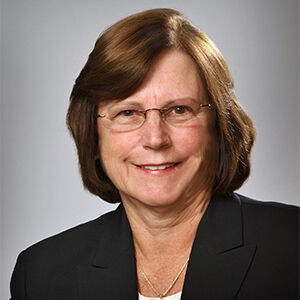
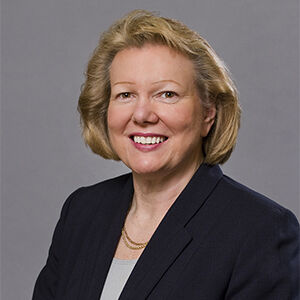
Brooks Nelson and Sarah McGregor, Tax Director, welcome Deb Walker, Tax Director, on today’s tax beat podcast to learn more about the many new retirement plan provisions introduced in SECURE 2.0.
This Podcast Will Cover:
- 2:55 – Background on SECURE 2.0
- 4:08 – Provisions Impacting Employers
- 6:07 – Changes to Catch-Up Contributions
- 11:27 – Changes to Required Minimum Distributions
- 16:09 – Unused 529 Plans
- 18:33 – Benefits for Employees
Related Insights
View All Tax Beat Podcasts
HOST: BROOKS NELSON: Welcome to this edition of the Cherry Bekaert Tax Beat podcast. Today we're going to talk about the new provisions in the recently passed legislation called SECURE 2.0. It deals with a lot of retirement plan provisions and was included in the Consolidated Appropriations Act of 2023.
HOST: BROOKS NELSON: This SECURE 2.0 Act has been floating around for quite some time, so we're glad to see it passed. Joining today's conversation is Deb Walker, director of our firm's Tax Benefits and Compensation practice.
DEB WALKER: I'm doing great. Thank you.
HOST: BROOKS NELSON: Also as always, Ms. Sarah McGregor from Greenville, South Carolina.
SARAH MCGREGOR: Hi Brooks. Life is good, starting up a new year. It's a little bright and sunshiny today and not nearly as cold as it was over the holiday.
HOST: BROOKS NELSON: Good football weather. What is your prediction on tonight's Georgia game?
SARAH MCGREGOR: I'm hoping it will be very close and competitive all the way through. Being an SEC fan, I pull for the SEC to win it again.
HOST: BROOKS NELSON: Even as a South Carolina graduate, if you're going to have a team beat you then you want them to at least win the national championship. Fair enough.
HOST: BROOKS NELSON: I'm Brooks Nelson, sitting in Richmond, Virginia today. SECURE 2.0 follows the SECURE Act of 2019. This law was included, as I said earlier, in the recently passed Consolidated Appropriations Act.
HOST: BROOKS NELSON: We were hoping for more tax action and got less; we did not get an R&D expense repeal. We did get a conservation easement provision, and then we got SECURE 2.0, which has been pushed for enactment for quite some time.
HOST: BROOKS NELSON: Deb, what additional background on this law would you like to discuss and bring to our listeners' attention?
DEB WALKER: Retirement plan changes often make it into legislation because they are usually bipartisan. Congress generally agrees more people need to save, so this law is full of provisions to expand savings opportunities and make it easier for employers to correct plan errors.
DEB WALKER: I agree that our society is very consumer-focused, and encouraging savings is one area where Congress has acted to promote positive outcomes.
HOST: BROOKS NELSON: Why don't you cover some of the biggest provisions in SECURE 2.0 that will affect most employers?
DEB WALKER: One of the more controversial provisions is that permanent part-time employees now need to be eligible for 401(k) contributions. Historically, employers had to permit entry if an employee worked 1,000 hours of service in a 12-month period. Under SECURE 2.0, employees who work at least 500 hours per year for at least two consecutive years must be allowed to make salary reduction contributions to a 401(k) plan, with years counted beginning after 2021.
DEB WALKER: Employers are wrestling with how to administer this, and many may simply allow everyone in at 500 hours, but that remains to be seen.
HOST: BROOKS NELSON: Can employers still match only full-time employees?
DEB WALKER: Yes. Existing law already allows employers to give matching contributions to full-time employees but not to part-timers, and that will continue to apply. Being required to permit part-time employees to make salary deferrals does not force employers to provide matching contributions to those part-time employees, which substantially reduces the potential cost of this requirement.
DEB WALKER: Another notable provision is that catch-up contributions for individuals with W-2 wages over $145,000 must be treated as Roth contributions. We will need significant guidance on this, because it creates administrative complexity by treating participants differently based on W-2 income.
DEB WALKER: For new 401(k) plans where the employer has more than 10 employees and has been in existence for at least three years, the plan must include automatic enrollment. New employees will be automatically enrolled with a 3% default deferral, and automatic escalation must increase contributions by at least 1% per year until the rate reaches at least 10% and up to 15%. Employees can always elect out.
HOST: BROOKS NELSON: Automatic enrollment and auto-escalation have been popular best practices for years, so for many larger plans this is just codifying what they already do. One nuance is fiduciary responsibility around default investment elections and allocation of those default dollars.
DEB WALKER: The mandatory participation requirement only applies to new plans, so if you want complete flexibility you may consider starting a plan before you have been in existence for three years. The law also expands the IRS's self-correction program for plan errors, allowing more corrections without IRS involvement if the employer corrects errors before the plan is examined.
DEB WALKER: Employers should perform double checks and internal audits to find and correct errors before the IRS examines the plan. If the IRS audits and finds an error, the self-correction program is not available.
HOST: BROOKS NELSON: If an employer finds a technical error in their plan, what are they required to do to cure it?
DEB WALKER: Under current law, if the error is insignificant or discovered and corrected within two years, an employer can self-correct and restore affected participants to where they would have been absent the error. If the error is not eligible for self-correction or is discovered more than two years after it began, the employer must submit a correction under the IRS's voluntary correction program, pay a user fee, and obtain a closing agreement from the IRS. If the IRS finds the error during an audit, the employer must address it through the audit process, which carries larger penalties. That's why proactive plan reviews are important.
HOST: BROOKS NELSON: Let's talk about plan participants. The SECURE Act of 2019 raised the age when required minimum distributions (RMDs) start. How does SECURE 2.0 change RMD rules?
DEB WALKER: Under the prior law, RMDs began at age 72. SECURE 2.0 raises the RMD age to 73 for individuals who reach the prior RMD age after 2022, and it will eventually increase the RMD age to 75 by 2032. Once an individual has started RMDs, they must continue to take them at the applicable frequency.
DEB WALKER: If you turned 72 in 2022, the delay did not apply to you. Many provisions in this law have effective dates that do not apply retroactively and begin in 2023, 2024, or later.
DEB WALKER: The law also expanded catch-up contribution rules for those in their early 60s. For individuals aged 60 through 63, there are additional catch-up contribution opportunities of up to $10,000 per year in certain plans, subject to the new Roth treatment for higher earners.
DEB WALKER: Additionally, IRA catch-up contributions, which have been stuck at $1,000 for many years, will now be indexed for inflation.
HOST: BROOKS NELSON: Let's discuss starter plans and tax credits for small businesses.
DEB WALKER: SECURE 2.0 improves tax credits to encourage small businesses to start retirement plans. Employers with fewer than 100 qualifying employees receive a tax credit for starting a 401(k) plan, and employers with 50 or fewer qualifying employees receive an enhanced credit. There is also a credit tied to employee contributions in the first year—effectively a government incentive to help employees begin saving.
DEB WALKER: The enhanced credit can be 100% in the first year for certain employer contributions made for employees earning less than $100,000, then phases down to 75%, 50%, and 25% in subsequent years. These are income tax credits, not employment tax credits.
HOST: BROOKS NELSON: Sarah, there was an interesting provision about unused 529 plan funds. What did SECURE 2.0 change?
SARAH MCGREGOR: If you have an older 529 account with leftover funds and no eligible beneficiary to roll the funds to, SECURE 2.0 permits rollovers of unused 529 funds into a Roth IRA for the named beneficiary in certain circumstances. The rollover is limited to the annual Roth IRA contribution limit for the year and subject to an overall lifetime limit—around $35,000—and the 529 plan must have been maintained for at least 15 years. This lets families move long-unneeded 529 funds into retirement savings for the beneficiary.
DEB WALKER: To encourage early participation, starting 529s when children are young helps ensure the 15-year requirement is met.
HOST: BROOKS NELSON: Deb, what other broader financial provisions related to retirement did this act include?
DEB WALKER: One of my favorites is the student loan repayment provision. Employers can now make retirement contributions on behalf of employees who are paying down student loans when those employees cannot simultaneously contribute to a retirement plan. This allows employers to help employees save for retirement even while they are repaying student debt.
DEB WALKER: The law also permits employer-sponsored emergency savings accounts as a sidecar to qualified retirement plans, allowing employees to save up to $2,500 in after-tax dollars with in-service access, generally once per year. There are also favorable disaster distribution and loan relief provisions for participants whose principal residence is in a disaster area, including extended repayment options.
DEB WALKER: Finally, employers may offer de minimis financial incentives to encourage participation. "De minimis" is not defined in the statute, so we will need IRS guidance on what qualifies, but the change allows small incentives without violating 401(k) rules. Cash or cash equivalents remain taxable to the employee.
HOST: BROOKS NELSON: Deb, what should companies be doing now?
DEB WALKER: If you don't have a 401(k) plan, now is a good time to start one and take advantage of the setup and startup credits. Employers that use a large number of part-time employees should plan for the new inclusion rules and decide whether to provide matching or other employer contributions. Employers should also review plan operations to identify and correct errors before any IRS examination.
DEB WALKER: The RMD delay is beneficial for those who qualify, so participants should consider how the increased RMD age affects their retirement distribution planning.
SARAH MCGREGOR: The number of provisions in this bill is extraordinary, and the IRS will need time to issue guidance. Employers and fiduciary committees should review their plans, determine which provisions are mandatory and which are optional, and prepare for changes effective in 2024 and beyond.
SARAH MCGREGOR: There are many nuances, such as catch-up contributions being required as Roth for higher-paid employees, and employers should consider how to communicate Roth features if their plans do not currently offer them. Fiduciary committees will be very busy over the next year.
HOST: BROOKS NELSON: That wraps our discussion of the highlights of SECURE 2.0 and its impact on retirement savings and plans. Quick disclaimer: we are not providing specific tax advice on this podcast. Please consult with your tax advisor, hopefully at Cherry Bekaert, to discuss the information from today's episode.
HOST: BROOKS NELSON: For the firm's guidance and materials on this and other tax and business topics, check the firm's website at cb.com. This concludes today's podcast. Please like, share, and subscribe.
HOST: BROOKS NELSON: Thank you, Deb, and thank you to our listeners for spending your time with us.