

New Markets Tax Credits (NMTCs) provide essential benefits for driving economic growth and revitalization in underserved communities. By leveraging this impactful program, organizations can attract significant private sector investment through loans or equity, transforming community development projects and expanding access to jobs, facilities and services.
Additionally, NMTCs enhance the capacity of community development lenders, investors and financial service providers, creating a robust network that addresses the needs of low-income areas. With strategic allocation and comprehensive guidance, NMTCs empower businesses and nonprofits to achieve substantial community impact and sustainable growth.
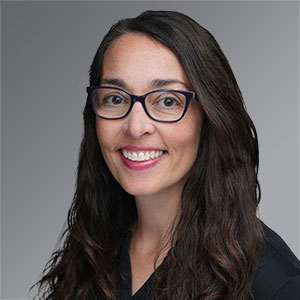
On this episode of Cherry Bekaert’s Tax Services Podcast, Laurel Tinsley, Cherry Bekaert's Strategic Financing Services Leader, and David Altman delve into the fundamentals of NMTCs and their profound influence on community revitalization. Together, they explore insightful examples of NMTC-driven projects and discuss how Cherry Bekaert's Strategic Financing Services team supports organizations in navigating the NMTC process.
Discover how Cherry Bekaert combines strategic knowledge and a nationwide network to maximize the benefits of NMTCs for impactful community development.
View All Tax Services Podcasts

LAUREL TINSLEY: Welcome to Cherry Bekaert's Tax Services Podcast. I'm Laurel Tinsley, the leader of our Strategic Financing Services Group. In today's podcast, we're exploring the basics of the New Markets Tax Credit program and its impact on community development, and how organizations can take advantage of this resource.
DAVID ALTMAN: Hi, Laurel. I began my career by joining the Peace Corps, which led to a lifetime commitment to public service. I completed graduate degrees—a PhD in genetics and an MBA from Vanderbilt—and then had an academic career focusing on research and policy for life sciences as a tenured professor at Texas A&M and Cornell.
DAVID ALTMAN: After leaving academia, I worked for a Fortune 500 company for five years and then formed my own company in 2001. The New Markets Tax Credit program began shortly after that, and I've been involved with it since its early years, spending the last decade of running my company exclusively helping sponsors with NMTC projects. In 2024, I decided to join forces with the wonderful organization you've set up at Cherry Bekaert.
LAUREL TINSLEY: We're happy to have you. Thanks for joining us today and for joining our team. For listeners hearing about New Markets Tax Credits for the first time, can you explain what NMTCs are and the role they play in community revitalization?
DAVID ALTMAN: The program is administered by an agency within the Department of the Treasury with the mission to expand economic opportunity for underserved people and communities by supporting growth and capacity of a national network of community development lenders, investors, and financial service providers.
DAVID ALTMAN: Practically, the program provides tax credits to attract private-sector investment through loans or equity investments to for-profit and nonprofit businesses located in low-income communities. Since the program's inception, we've measured results by quality job creation, which now numbers about one million jobs, and by improved access to community facilities and commercial goods and services that benefit low-income communities.
LAUREL TINSLEY: Before we dive deeper into examples and impacts, I'd like to touch on a report we reference frequently. The New Markets Tax Credit Coalition issues an annual report on the NMTC program that provides comprehensive resources and insights about the program's use. David, can you share a few insights from the coalition report and how that information might help organizations become awardees or receive an allocation?
DAVID ALTMAN: It's important to note that the program has evolved over time, which I view positively because the CDFI Fund has incorporated input about what best benefits low-income communities. According to the most recent report, 85 percent of NMTC financing went to severely distressed census tracts, and 28 percent went to non-metro counties—both record highs. This diversification helps avoid concentration in limited geographic areas.
DAVID ALTMAN: Pricing has changed over time and is important to monitor. The current median price is $0.79 and has slowly risen since the pandemic. The reported range is $0.72 to $0.87, which is significant. Native American, Native Hawaiian, and Native Alaskan projects now represent seven percent of all financing, with a record $314 million invested in those communities.
DAVID ALTMAN: For the first time, manufacturing and health care—roughly equal contributors—account for more than 50 percent of NMTC allocations going to projects. That signals where emphasis may be in the near future.
LAUREL TINSLEY: That's helpful. The emphasis on manufacturing and health care as 50 percent of projects is a notable trend change and highlights program priorities in recent years. Can you share examples from your history of projects that received NMTC allocations, why they mattered to their communities, and what impacts they created?
DAVID ALTMAN: We aim for impactful projects that generate quality jobs or provide needed services. One project involved $20 million in NMTC allocation to build nine small health clinics in rural Oregon. At the time, Medicaid expansion was occurring, and these clinics helped expand access across the state. As a result, 150,000 individuals in rural communities were added to the Medicaid rolls, helping Oregon be one of the first states to meet Medicaid expansion targets.
DAVID ALTMAN: That expansion produced two state payments totaling $1.9 billion in unrestricted funds, which significantly aided the state's budget. The project received notable attention and was nominated as Project of the Year by the coalition. The largest dental provider in the United States at the time, DentaQuest, invested in the company behind the clinics and helped scale the model to 20 states, enabling millions to receive oral health care they previously lacked.
DAVID ALTMAN: Another example is a current project our group is working on with a $4 million NMTC allocation used to refinance debt for a nonprofit manufacturing facility that primarily employs adults with disabilities. The facility is a 125,000-square-foot building that provides jobs, including part-time roles, for individuals who face barriers to employment.
DAVID ALTMAN: The commercial debt for the acquisition currently carries an interest rate of 8 percent, but the NMTC structure will allow interest-only payments for seven years at about 2.5 percent. Even a relatively small allocation can have a dramatic impact on supporting social services and sustaining these jobs.
LAUREL TINSLEY: Navigating the NMTC program can be complex. How does the Strategic Financing Services team at Cherry Bekaert assist organizations in accessing NMTCs and ensuring successful outcomes for clients and the low-income communities they serve?
DAVID ALTMAN: Cherry Bekaert takes a comprehensive approach under your leadership, Laurel. Our small team of about 20 employees is distributed nationwide, giving us boots on the ground and strong local relationships with investors, CDEs, and community stakeholders.
DAVID ALTMAN: The group includes professionals from varied backgrounds—legal, academic, and industry—which contributes to a collaborative, multidisciplinary approach. Being part of a larger, fast-growing accounting firm like Cherry Bekaert provides additional connections and services for clients, including audit, historic tax credit coordination, low-income housing tax credit work, opportunity zone expertise, government accounting, and nonprofit accounting.
LAUREL TINSLEY: Can you describe the process once we've signed a client? How do we help them structure their project and go to market to obtain an allocation?
DAVID ALTMAN: The most important element of any project is the story behind it. You must craft a compelling narrative that demonstrates clear community impact aligned with the Treasury's mission. A strong story engages partners—investors, lenders, and other stakeholders—and helps generate enthusiasm for the project.
DAVID ALTMAN: You also need to consider all available options because the program is not cookie-cutter. Each transaction evolves, and creativity is required to maximize value and create a win-win for investors and the project. Experience matters because surprises arise in every project, and having the right expertise helps close transactions efficiently and achieve maximum benefit.
LAUREL TINSLEY: Those are great points. Having the human touch and the data to back it up allows you to address both emotional and empirical considerations. That's an excellent example, David. Looking ahead, what do you see for the future of NMTCs and the role for community development? Do you have a prediction for us?
DAVID ALTMAN: Predicting specifics is difficult because the program can take unpredictable turns, which is part of its vibrancy and relevance. As of January this year, there has been $73 billion in allocation, and more will follow. The program leverages private-sector capital—studies show roughly $8 of investment for every $1 of NMTC allocation—which produces substantial long-term impact.
DAVID ALTMAN: We are entering a double round—the largest we've seen—totaling $10 billion, which should accelerate projects nationwide and increase attention to the program. NMTCs have enjoyed bipartisan support and are a long-term program focused on helping low-income areas participate in economic development rather than becoming a drag on broader growth.
LAUREL TINSLEY: Thanks for your insights, David. Your comments about vibrancy and optimism for the future are important. When change occurs, being able to adapt and match resources to needs is essential. We're excited to see what's next for the NMTC program as a powerful tool for growth in underserved communities.
LAUREL TINSLEY: Thank you to our listeners for tuning in to Cherry Bekaert's Tax Services Podcast. This has been Cherry Bekaert's Strategic Financing Services team leading today's episode. If you'd like to learn more about New Markets Tax Credits, please reach out to either of today's speakers, Laurel Tinsley or David Altman, or our larger team who are available to answer questions.
LAUREL TINSLEY: New Markets Tax Credits are necessary given the scale of need. I remain focused on the work rather than worry because there's much to be done. As long as we have programs and hope for the future, we can continue making a positive impact on the communities we serve. Thank you, David, and thank you, listeners.
HOST: We hope this episode enlightened you about a topic you were not previously familiar with or provided additional insights if you were already familiar with New Markets Tax Credits. Thank you.