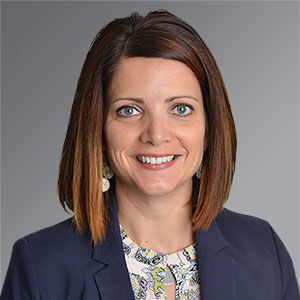
Technology products and software that are hyper-focused on creating efficiencies within an organization can save time and money, and even help scale a business. But as a technology leader, have you taken a step beyond that to explore what it can mean for the empowerment of your employees? Join Dixie McCurley, as she discusses the importance of breaking down silos within an organization and creating a culture of true collaboration with our guest and COO of Expensify, Anuradha Muralidharan.
Anu helps her organization meet its mission of returning to its people and customers our scarcest asset: time. In this podcast, she shares the pros and cons of her company’s unique model, and how it inspires employees and maintains the company culture while still fostering growth by creating efficiencies for its people.
Is Your Team Operating as Efficiently as You Would Like?
Let us help you explore areas of your business that can lead to greater motivation, inspiration and empowerment for your employees. We’re pleased to offer a Health of the Business Check-Up Report at a discounted rate of $500 to get you started. We’ll examine where you are, where you want to be and how to get there by transforming the accounting function.
Listen to the rest of this series:
- The Year of Efficiency Part 1: Process Optimization
- The Year of Efficiency Part 2: Leveraging Automation
- The Year of Efficiency Part 4: Growth Through Innovation
DIXIE MCCURLEY: Hello everyone, and thanks for tuning in to Cherry Bekaert's latest technology podcast. My name is Dixie McCurley, and I lead the firm's client accounting services. For clients that don't want to do their accounting internally, they outsource to us.
DIXIE MCCURLEY: I'm joined today by Anuradha Muralidharan, chief operating officer of Expensify and a great partner to us at Cherry Bekaert. Anu and I were invited to host this episode as part of a short series focused on the Year of Efficiency and what it means for technology companies.
ANURADHA MURALIDHARAN: Pleasure to be here, Dixie. For those who may not be familiar with Expensify, our company is a payments super app. We simplify how people and businesses manage money, track expenses, process invoices, pay bills, and more.
ANURADHA MURALIDHARAN: Our mission is about returning time to our customers because no one wants to spend their time on expense reports or reconciling books. We try to automate as much as possible, put control in customers' hands, and return their scarcest asset to them.
DIXIE MCCURLEY: While Expensify's functionality is fantastic, I want to discuss how gaining efficiencies, such as using a product like Expensify, can empower a company's employees. Your team approach is unique, and I'd love our audience to hear more about that.
ANURADHA MURALIDHARAN: I joined Expensify in 2015 after working at large companies like Oracle and Citibank, plus a brief startup stint. I came from a different world and was often frustrated by the inability to affect change in those organizations.
ANURADHA MURALIDHARAN: When I started at Expensify, we were about 60 to 70 employees and later grew to roughly 130 to 140. At that point, we examined growth and culture. Every company talks about maintaining culture, but as you grow it becomes harder to preserve the soul of the organization.
ANURADHA MURALIDHARAN: We noticed an unequal distribution of work volume across teams. You staff up for peak demand, leaving people on the bench when demand declines. That is inefficient both for cost and for people motivation, because being challenged drives learning and growth.
ANURADHA MURALIDHARAN: We asked whether roles needed specialists or if we could create a more generalist organization so no single person was pigeonholed. Roles would be documented so people could move in and out of them flexibly. That was a turning point.
ANURADHA MURALIDHARAN: We have not grown beyond the 140 headcount number in the last seven years, yet our product has grown tremendously and we went public. We've achieved this with a tight workforce while maintaining culture and inspiring our people.
DIXIE MCCURLEY: That resonates. Organizations create silos, and at an inflection point like 140 people you might need to reorganize to break those down. How do people feel about reorganizing to collaborate across teams and not be limited to one function? How does that work when collaborating with other organizations or vendors?
ANURADHA MURALIDHARAN: Change is difficult. There are pros and cons to the model, and whether pros outweigh cons depends on an individual's career trajectory and personal life. One downside is it can feel chaotic because a generalist organization only works if everyone is exposed to all information.
ANURADHA MURALIDHARAN: If I can't see marketing challenges and proposed fixes, I can't jump in. We have a written-down culture and a global workforce, so we do everything on Slack and write everything down. That results in an overwhelming amount of information.
ANURADHA MURALIDHARAN: Our star players have learned to prioritize information and not let FOMO take over. They focus on the current problem, then shift gears and catch up on a new area when needed.
ANURADHA MURALIDHARAN: Externally, we don't operate in a bubble. We home-grow many tools, but when we partner with organizations like yours, we discuss our culture and establish ground rules for collaboration. It's been a process of trial and error, and it isn't always a fit, but we're improving.
DIXIE MCCURLEY: I've experienced that firsthand working with Expensify. A few months ago, your team met with ours to troubleshoot technology bottlenecks. Instead of a 55-email thread, you brought the team together to collaborate directly.
DIXIE MCCURLEY: In that meeting we removed the bottleneck of a single account executive and the sales representative who had supported us for years. You listened to our biggest pain points and helped us find the root cause in a couple of hours. You said it could be fixed in two weeks, which demonstrated your flexible team environment.
DIXIE MCCURLEY: That one quick fix gave us capacity to address the next item and create a roadmap for improvement. Scaling comes from collaborating with your team and partners, and that's a big part of what we do together.
ANURADHA MURALIDHARAN: I love that. We're building an interaction model to avoid long email threads and instead identify what needs to be done, who will do it, and what happens next. We're incorporating this into our product.
ANURADHA MURALIDHARAN: We call the feature Tasks. The new product will be more chat-centric to enable efficient collaboration across the parties managing a financial process: employees, approvers and admins, and accountants, where you sit.
ANURADHA MURALIDHARAN: Every part of the process depends on the layer beneath it to complete work and close the books. Tasks will document the entire process, show where you are in a period, identify which step is blocked and by whom, and enable transparency downstream.
ANURADHA MURALIDHARAN: Our hope is to bring what we've learned as an organization into the product and make it available to all customers and partners.
DIXIE MCCURLEY: Culture is one of the factors we consider when choosing technology partners. One example is that you launched Concierge a few years ago, and learning how to work with that has helped us support our clients more effectively.
DIXIE MCCURLEY: The Tasks concept resonates because we often need to assign tasks to clients or receive tasks from them. That communication model has improved through learning from each other.
ANURADHA MURALIDHARAN: At Expensify, someone who has worked here four to five years is considered a newbie; I've been here eight years. I think people stay because they are challenged and empowered.
ANURADHA MURALIDHARAN: The model and software tools help us be efficient, but it's beyond tech and cost savings. It allows individuals to avoid being pigeonholed, to solve problems, and to recognize problems and volunteer to address them. That motivation keeps people here.
DIXIE MCCURLEY: Being curious and open to constructive feedback is powerful. A favorite book of mine is Radical Candor, which talks about opening ourselves to that level of feedback. You and your team model this at Expensify, and you answer my calls when we need something fixed.
ANURADHA MURALIDHARAN: I love that partnership with you.
DIXIE MCCURLEY: Thank you, Anu, for the conversation. For those listening, thank you for tuning in. We hope you've enjoyed this series on the Year of Efficiency so far.
DIXIE MCCURLEY: We'll tune back in for the final episode soon. Thank you, Anu. Goodbye.