


Technology Industry: What Middle Market CFOs Are Prioritizing in 2026
Technology chief financial officers (CFOs) are navigating rapid innovation cycles, shifting business models and increasing stakeholder expectations while maintaining financial integrity and operational visibility. Similar to other industries, finance leaders in technology are being asked to support strategy, revenue growth and operational performance, all while managing complex data, compliance demands and fragmented systems.
The Middle Market CFO Survey reveals a sector with strong adoption of modern tools but limited ability to translate them into faster decision cycles and more reliable forecasts.
Cherry Bekaert surveyed CFOs and senior finance executives at U.S. enterprises with revenue between $5 million and $250 million across various industries, including technology, to better understand the trajectory of their modernization efforts. The full report is available at cbh.com/cfosurvey.
Technology Finance Is Expanding Across Strategy and Operations
Technology CFOs reported significant involvement in strategic decisions, operational performance, and technology and data strategy. With high expectations for fast, trustworthy insight, finance leaders are supporting business model evolution and broader operational initiatives. This expanded remit heightens the need for clean, connected data to monitor performance, forecast accurately and guide decisions at speed.
Where Technology CFOs Are Leaning In
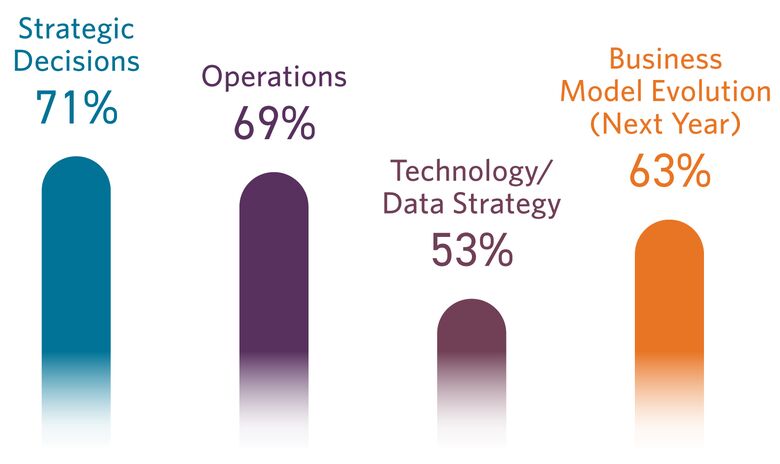
Survey results show that technology finance teams are deeply involved in operational and technology-related initiatives, reflecting the industry’s rapid shift as companies evolve from pure product firms to service-based and subscription-driven models. Technology and data strategy have become core finance responsibilities.
Book a Complimentary Finance Modernization Assessment to Guide Your 2026 Roadmap
Modern Tools, Disconnected Ecosystem
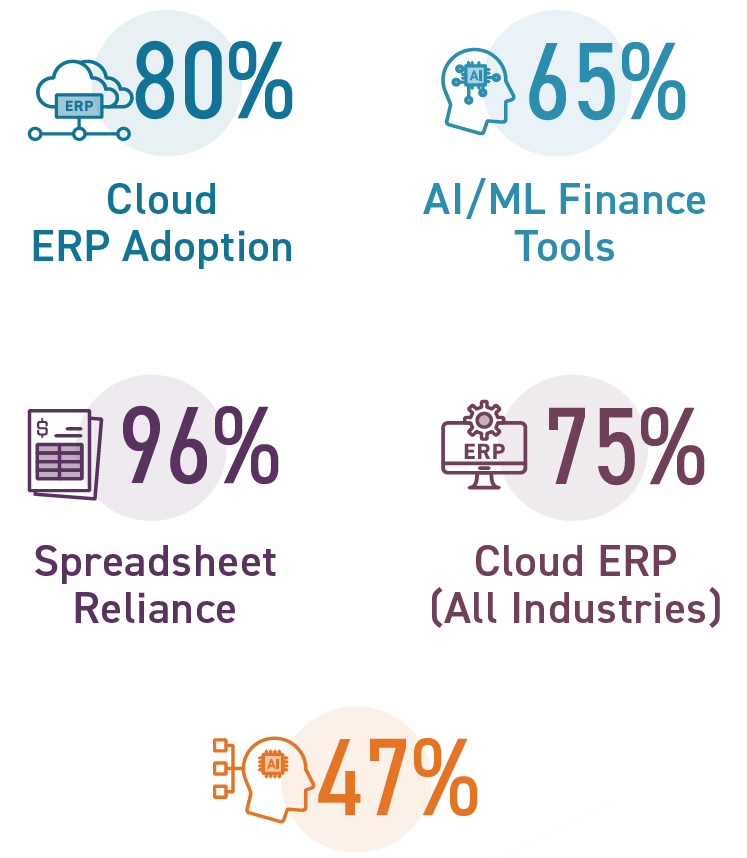
Technology CFOs lead all industries in the adoption of cloud enterprise resource planning (ERP) platforms, artificial intelligence (AI) and machine learning (ML) tools. However, spreadsheet reliance remains nearly universal. This contradiction highlights a common challenge: systems have been modernized while workflows remain manual and disconnected, limiting return on investment and slowing the cadence from insight to action.
Current State of Enterprise Systems and Tools
Data Silos Limit Operational Visibility
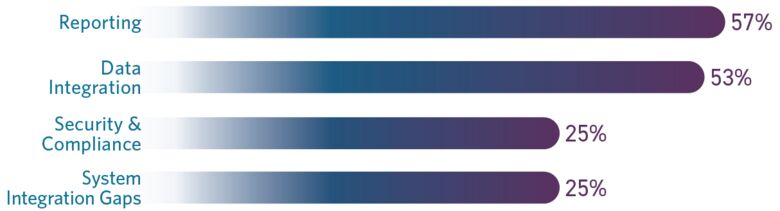
Integration and reporting were the top pain points cited by technology CFOs. Fragmented systems undermine f inancial planning and analysis (FP&A), forecasting, operational monitoring and compliance. Without governed, connected workflows companies struggle to build audit-ready reporting, evidence-ready controls and decisionready metrics. These challenges increase risk and degrade confidence in the numbers.
Top Pain Points
Compliance Requires Better Process and Data Architecture
Compliance challenges stem not just from regulations but from fragmented workflows. Technology companies facing growth, geographic expansion and evolving security requirements must maintain accurate billing, revenue recognition and tax reporting. Spreadsheet-driven workarounds make it difficult to adhere to standards, manage audit trails and maintain defensible evidence. Integration becomes a control that reduces risk and strengthens financial governance.

Forecasting Must Move Beyond Assumptions
Disjointed systems limit forecasting accuracy. Rolling forecasts built on probability-weighted pipeline, delivery capacity and backlog burn are more reliable than top-down models driven by static assumptions. Technology CFOs must also reflect tax implications, pricing decisions and billing configurations to avoid period-end surprises and improve cash visibility.
Forecasting Workflow

Where the Pressure Shows Up First
Technology CFOs see the greatest strain in revenue operations, billing, customer-level margin visibility and security/compliance readiness. Disconnected systems result in manual reconciliations, slower decisions and reduced visibility into customer behavior, usage patterns and cash conversion.

What Technology CFOs Are Prioritizing First
- Connecting the revenue engine: Integrating customer relationship management (CRM), billing, revenue recognition and ERP systems reduces reconciliation, improves visibility and strengthens controls.
- Rebuilding forecasting models: Anchoring forecasts in operational drivers increases accuracy and strengthens scenario planning for pricing decisions, resource allocation and cash management.
- Embedding compliance into operations: Treating compliance as a process design problem ensures workflows are evidence-ready and aligned to modern frameworks, reducing risk and improving audit readiness.
- Clarifying ownership: Defining clear roles for data stewardship, system access and finance outputs helps teams maintain cadence and reduces reliance on manual workarounds.
How CFOs Measure Progress
| KPI | Why It Matters |
| Days to Close | Speed + control as environments scale |
| Forecast Accuracy | Confidence in investment and hiring decisions |
| Cash Predictability | Runway visibility and valuation readiness |
Looking Ahead
Technology finance teams have strong foundations for modernization but require better connectivity across systems, more disciplined workflows and improved decision velocity. By embedding governance, building tax-aware and operationally grounded forecasts, and simplifying workflows, CFOs can transition from reactive finance to a strategic function that drives growth with confidence.
“Modern finance in technology is not about adopting more tools. It is about connecting data, strengthening governance and improving decision velocity so leaders can act with confidence at scale.”
Why Choose Cherry Bekaert for Finance Modernization
We understand the middle market because it has been our focus from the start. We have successfully guided clients through various stages of growth, allowing us to understand the evolving landscape and the critical factors that drive success.
At Cherry Bekaert, we empower companies to modernize their finance function with a people-first, performance-driven approach. By aligning strategy, technology and talent, we help CFOs eliminate inefficiencies, unlock real-time insights, and build scalable processes that drive accuracy, agility and growth.
Our tailored roadmap delivers quick wins in the first 30/60/90 days while laying the foundation for long-term transformation — turning finance into a catalyst for enterprise-wide results.
Let us be your trusted advisor. cbh.com/modernfinance