


A Focused View of Finance Leaders Steering Modernization, Performance and Growth
Industrial manufacturing chief financial officers (CFOs) are navigating persistent volatility while balancing cost, capacity and growth. Their role now reaches deeper into operations and strategy, requiring them to solve plant‑level challenges while maintaining forward visibility on pricing, cash and investment needs. In Cherry Bekaert’s Middle Market CFO Survey, manufacturing respondents report heavier operational involvement, stronger cost pressure and greater system constraints than respondents in other industries.
This snapshot highlights the three most important trends shaping the manufacturing finance function and the modernization actions that create meaningful impact.
Cherry Bekaert surveyed CFOs and senior finance executives at U.S. enterprises with revenue between $5 million and $250 million across various industries, including industrial manufacturing, to better understand the current and future trajectory of their modernization efforts. The full report is available at cbh.com/cfosurvey.
Finance Is Playing a Larger Role in Operations and Strategy
Where Manufacturing CFOs Are Leaning In
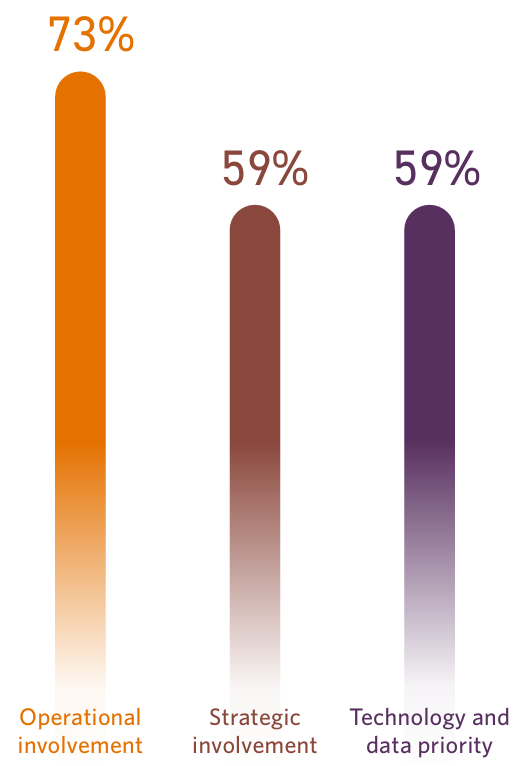
Manufacturing CFOs reported higher involvement in operational decisions (73% compared to 60% across all industries) and increased participation in strategic planning (59% compared to 55%).
With responsibilities spanning from the plant floor to the boardroom, finance leaders are increasingly asked to align pricing and cost decisions, resolve bottlenecks and strengthen planning discipline. This expanded remit makes alignment between finance, operations and information technology (IT) essential. Clean data, integrated systems and shared definitions of performance are now foundational to moving quickly and confidently.
“Manufacturers are no longer treating f inance as a back‑office function. CFOs are becoming the orchestrators of cost discipline, operational strategy and technology modernization.”
Cost Pressure and Margin Discipline Remain Top Priorities
With macroeconomic pressures top of mind for all respondents, managing costs or improving margins was a top priority for 41% of manufacturing CFOs. At the same time, 100% cited a “lack of data for critical decisions” as a top barrier, and 91% reported financial system issues.
Why Margin Discipline Is Harder in Manufacturing

These pressures elevate the importance of clear costto‑serve logic, working capital targets — days sales outstanding (DSO), days payable outstanding (DPO) and days of inventory on hand (DOH) — pricing guardrails and forecasting discipline. When these elements are aligned, CFOs can improve unit economics and speed up decisions that impact profitability.
Join Us at Our Upcoming Manufacturing Summits
Join Cherry Bekaert and industry leaders for timely discussions on the trends, challenges, and opportunities shaping today's manufacturing environment. These regional summits bring together manufacturing executives and business leaders to explore strategies for driving operational efficiency, embracing innovation, navigating economic change and positioning their organizations for sustainable growth.
- Reading, PA
Tuesday, October 20 | 3:30 – 6:30 P.M - Cincinnati, OH
Tuesday, October 27 | 8:00 – 11:30 A.M. - Louisville, KY
Thursday, October 29 | 7:45 – 10:30 A.M
Clean, Connected Data Is Now a Prerequisite for Modernization
Every manufacturing respondent cited macroeconomic pressures, including inflation, tariff volatility and geopolitical uncertainty, as ongoing concerns. These challenges intensify when systems and data lack accuracy and integration.
Finance leaders identified three constraints that slow decisions:
- Legacy systems, including outdated enterprise resource planning (ERP) platforms and spreadsheets.
- Inconsistent plant data, including bill of materials (BOM), work in progress (WIP) and overall equipment effectiveness (OEE).
- Critical talent gaps, with 91% citing finance talent shortages and half reporting additional skills gaps, including employees lacking system literacy and data fluency.
Leaders are addressing these issues by simplifying processes, cleaning key data and connecting systems before layering automation and artificial intelligence (AI). CFOs should focus on simplifying and integrating processes and data, then automating and incorporating tools that reduce manual touches and shorten decision cycles for scheduling, pricing and cash.
Book a Complimentary Finance Modernization Assessment to Guide Your 2026 Roadmap
Where Manufacturing CFOs Are Focusing
Survey findings point to several areas where finance leaders are investing time and energy.
Stronger Scenario Planning Tied to Operational Signals
CFOs are building monthly scenario reviews driven by lead‑time changes, yield variance, scrap, tariffs or vendor performance. The goal is to create competitive advantages and improved decision‑making by reducing the time between early signal and action.
Tax Incentives as Modernization Accelerators
State and federal incentives can materially improve the economics of upgrading plants and systems. Examples include Section 179 expensing for equipment, Qualified Production Property (QPP) under P.L. 119‑21, Republicans’ “One Big Beautiful Bill Act,” workforce training incentives and foreign trade zone (FTZ) benefits. Finance teams are embedding incentive evaluation into scenario planning to avoid missing eligibility windows.
Tax Levers That Accelerate Manufacturing Modernization
- Bonus Depreciation & Section 179D Energy Efficient Commercial Buildings Tax Deduction (Section 179D): Accelerate expensing of machinery, automation and plant systems.
- Qualified Production Property (QPP): Elective treatment that can improve ROI on PP&E upgrades under P.L. 119‑21.
- State Investment Credits: Reduce cost of equipment, facility expansion and payroll tied to modernization.
- Workforce Incentives: Grants/credits for training employees on modern systems, automation and advanced analytics.
- FTZ Benefits: Duty elimination/deferral and supply chain transparency for global manufacturers.
- Utility Incentives: Sales tax exemptions and energy related rebates that reduce operating costs tied to modernization.
Practical Automation and Early‑phase AI
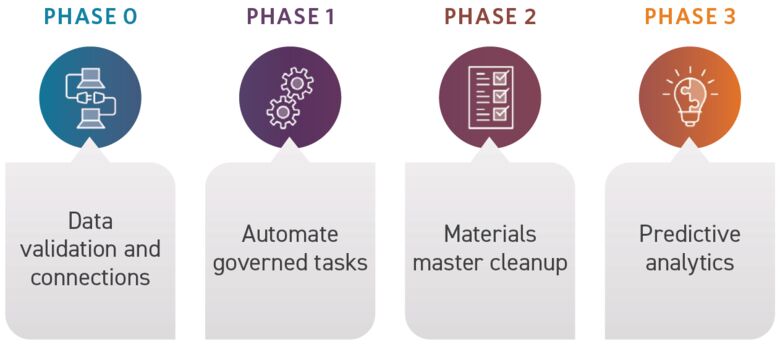
Manufacturers actively implementing AI are starting with high‑impact, data‑ready tasks such as accounts payable (AP) and accounts receivable (AR), matching and materials master cleanup. With finance modernization at the top of leaders’ priority lists, automation tools can offer valuable support to streamlining workflows and integrating siloed data. Although 27% of respondents reported concerns about how their company will engage with emerging technologies, AI can enable better production and strategic growth when grounded in accurate data and harmonized systems.
Looking Ahead
Modernization momentum is building, with 68% of manufacturing respondents already implementing initiatives and 27% planning near‑term action.
Those who pull ahead will do so by focusing on clean data, integrated systems, pricing and cash discipline, faster scenario cycles and practical automation supported by improved talent capability. Industry leaders will further align people, process, technology and data around governed metrics and secure architecture. Ultimately, these efforts will leverage modernization into operational excellence and durable growth.
“The near‑term advantage is not more dashboards. The ultimate goal is faster, better‑governed decisions that improve pricing, capacity and cash outcomes.”
Why Choose Cherry Bekaert for Finance Modernization
We understand the middle market because it has been our focus from the start. We have successfully guided clients through various stages of growth, allowing us to understand the evolving landscape and the critical factors that drive success.
At Cherry Bekaert, we empower companies to modernize their finance function with a people‑first, performance‑driven approach. By aligning strategy, technology and talent, we help CFOs eliminate inefficiencies, unlock real‑time insights, and build scalable processes that drive accuracy, agility and growth.
Our tailored roadmap delivers quick wins in the first 30/60/90 days while laying the foundation for long‑term transformation — turning finance into a catalyst for enterprise‑wide results.
Let us be your trusted advisor. cbh.com/modernfinance