Mid-sized organizations are at the forefront of adapting to an ever-changing technological landscape, and 84% of mid-market finance leaders name data integration and quality as their top priority in the next year, according to Cherry Bekaert's CFO Survey.
Cloud computing and data migration are indispensable strategic initiatives for businesses attempting to drive efficiency, scalability and innovation. Leaders who wait to modernize with cloud and data migration risk being outcompeted by more agile companies, resulting in reduced customer engagement, operational inefficiencies and the inability to scale.
What Is Cloud and Data Migration?
Cloud and data migration — commonly referred to as cloud migration — involves transferring data, applications and information technology (IT) processes from on-premises hardware to a cloud computing environment.
While the process may seem straightforward, it requires careful consideration and strategic planning to ensure seamless integration and operation. At its core, data migration serves to modernize IT infrastructure, enhance business agility, and improve accessibility, making organizational data both secure and readily available.
The Critical Importance of Cloud Migration
Cloud computing is revolutionizing the way mid-sized organizations operate. According to a 2024 study by Flexera, 72% of organizations have increased their cloud investments to enhance agility and competitive edge. Many organizations grapple with outdated legacy systems that present security risks, impede productivity and stifle innovation.
Transitioning to cloud platforms enables businesses to liberate themselves from the constraints of traditional IT systems, reducing maintenance costs and allowing IT departments to focus on fostering innovation and driving business growth.
Benefits of Cloud Migration
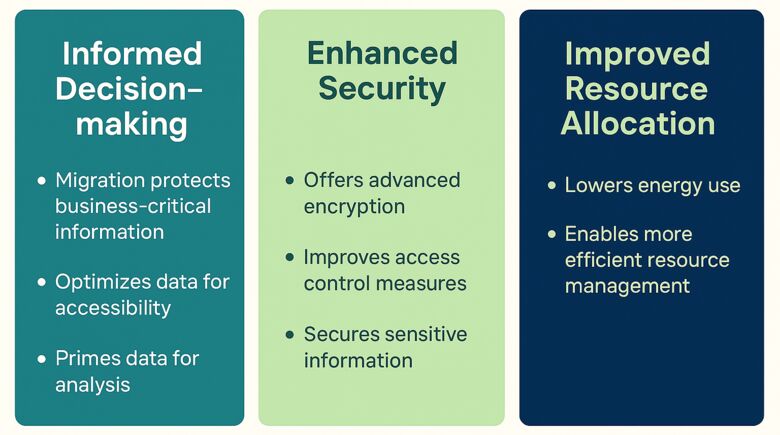
Along with the benefits highlighted in the graphic above, cloud migration benefits include:
- Cost Reduction
- Performance Enhancement
- Greater Flexibility
- Optimized Efficiency
- Improved Scalability
- Innovation Enablement
By migrating to the cloud, businesses can expand without the burden of costly physical infrastructure.
Driving Efficiency Through Cloud Technologies
Cloud technologies remove the need for on-premises hardware maintenance and upgrades, so mid-size organizations can redirect resources toward strategic initiatives rather than routine tasks.
The cloud provides automated updates and maintenance, ensuring systems consistently operate at optimal performance without downtime. Additionally, cloud platforms often include tools for monitoring, analyzing and optimizing resource use, enabling companies to manage their IT environments more effectively and cost-efficiently.
Improving Scalability With Cloud Solutions
Scalability is a key advantage of cloud computing, offering mid-sized businesses the flexibility to grow without being limited by physical infrastructure. As companies expand, they can easily scale their operations by increasing cloud capacity on demand, whether for storage, processing power or bandwidth.
This flexibility allows businesses to meet increasing customer demands without delays. Cloud providers offer a variety of scalable services, such as serverless computing and autoscaling, which automatically adjust resources based on real-time needs, helping businesses maintain performance during peak periods.

Fostering Innovation Through Cloud Adoption
Innovation is at the core of cloud technologies and enables mid-size organizations to experiment, develop and deploy new ideas quickly. The cloud offers a rich ecosystem of development tools, platforms, and frameworks that promote collaboration and speed up the innovation process. Teams can prototype, test and launch applications more efficiently.
With access to advanced technologies like artificial intelligence (AI), machine learning (ML) and analytics, businesses can gain insights and foster innovation in their products and services. Adopting cloud technology often leads to increased creativity and faster go-to-market strategies, giving mid-size organizations a competitive advantage.
Leading Cloud Service Providers
The role of leading cloud service providers is crucial for mid-size organizations venturing into cloud migration. Amazon Web Services (AWS), Salesforce, Microsoft Azure and Google Cloud Platform (GCP) are prominent players that deliver comprehensive solutions tailored to the unique needs of businesses. Their services range from straightforward data migration tools to advanced analytics, empowering mid-size organizations to fully capitalize on cloud benefits to enhance operations.
Amazon Web Services
AWS is known for its robust, scalable infrastructure and provides flexible solutions supported by an expansive global reach. With more than 200 featured services, AWS gives companies access to a comprehensive toolkit to address operational needs.
Salesforce
As a leading provider of customer relationship management solutions, Salesforce extends its cloud offerings to include a comprehensive suite of services designed to optimize business operations and customer engagement.
Microsoft Azure
Azure is an ideal choice for organizations seeking seamless compatibility and enhanced productivity tools, as it offers deep integration with Microsoft enterprise products.
Google Cloud Platform
With a focus on cutting-edge analytics and AI capabilities, GCP is suited for businesses looking to leverage machine learning and advanced data processing.
IBM Cloud
Known for its strong focus on security, IBM Cloud provides exceptionally reliable solutions backed by robust encryption and compliance tools, appealing to organizations with stringent regulatory requirements.
Strategic Planning for Cloud Migration
Successful cloud migration requires a structured, end-to-end approach that aligns technology decisions with business goals. To support a smooth and effective transition, organizations should:
- Conduct detailed assessments of their current IT infrastructure
- Identify appropriate cloud solutions
- Develop a migration plan designed to minimize disruptions
- Collaborate with experienced providers and consulting firms to implement best practices and enable seamless transitions
Benefits of Cloud Migration FAQs
Potential risks of cloud migration include data security breaches, downtime during migration and loss of visibility. To mitigate security risks, businesses can ensure they have clear security protocols and adhere to compliance measures. Additionally, creating a strong cloud migration strategy and choosing the right solutions can help companies avoid downtime, data loss, and lack of control.
There are multiple ways to approach cloud migration, including:
- Rehosting, or moving from on-premises hosting to the cloud with minimal changes
- Replatforming, which involves making adjustments during an application move, such as system upgrades
- Repurchasing, or moving applications to a new, cloud-native platform
- Refactoring, a heavier lift that restructures applications to run natively in the cloud
No cloud migration approach is perfect, and the type of migration a company chooses will depend on its unique needs and goals.
There are various reasons a business may need to consider cloud migration, including rapid growth and an inability to manage data security gaps. Aging servers and hardware are other common signs an organization should consider moving to the cloud soon, as are rising costs associated with on-premises hosting.
Collaborating with a trusted cloud migration advisor helps reduce risk and leverage solutions for overall success. Since the cloud is often complex, having experienced guidance is valuable for planning effective strategies, streamlining migration and validating the setup.
Your Guide Forward
Our Digital Advisory team combines strategic planning with technical excellence to enable a seamless transition to cloud environments. Cherry Bekaert's end-to-end solutions drive change management and ignite growth in productive, cost-effective ways by helping companies predict data-based outcomes while adopting and applying relevant technologies to optimize performance.
Whether it is optimizing existing cloud infrastructures or facilitating complex data migrations, our tailored services help businesses navigate the complexities of modern cloud ecosystems with confidence and precision.
If you're ready to move beyond the limitations of your current system, Cherry Bekaert's Technology advisors can help you navigate the transition. We will assess your current environment, identify optimization opportunities and develop an implementation strategy that aligns with your growth objectives.
Related Insights