


With tariffs and geopolitical instability impacting supply chains, manufacturers are increasingly pivoting to the just-in-case (JIC) inventory management strategy, or hybrid models, while using tools such as data warehouses to support sourcing and inventory decisions.
For decades, the just-in-time (JIT) manufacturing model, with its ultra-lean supply chain method, was the standard for operational efficiency. This began to shift when the COVID-19 pandemic exposed the drawbacks of as-needed inventory, and the move toward new models accelerated with tariffs and ongoing geopolitical instability. These market disruptors have turned inventory strategy from a straightforward operations decision into a broader risk management and capital allocation decision.
While it’s clear manufacturers must shift strategies, chief financial officers (CFOs) often wade through disconnected systems and data that impair informed decision-making. Cherry Bekaert’s CFO Industrial Manufacturing Survey found that 100% of respondents faced a lack of data to support critical decisions, a troubling knowledge gap considering 73% reported increased operational involvement. To remain competitive amid market disruption, manufacturers must invest in data infrastructure and automation to close information gaps and support strategic decisions, including the shift to hybrid inventory models.
The Data Behind Business Disruption
- Roughly 60% of U.S. companies had logistic cost increases of 10% to 15% due to tariffs, according to Supply Chain Brain
- Nearly half of the manufacturers surveyed by Fast Radius have moved away from JIT due to supply chain issues
- Manufacturers Alliance 2025 Mid-year Tariff Impact Survey found that 90% of manufacturers are concerned about the impact of tariffs
- Supply chain disruptions cost $184 million a year on average, according to Swiss Re
Just-in-Time vs. Just-in-Case Inventory Models
|
Just-in-Time |
Just-in-Case |
|
Minimizes inventory levels |
Maintains buffer or safety stock |
|
Inventory arrives as needed for production or fulfillment |
Extra inventory is held to absorb demand or supply variability |
|
Greater reliance on supplier reliability and lead-time consistency |
Less vulnerable to short-term supplier disruptions |
|
Increased risk of stockouts if supply is delayed |
Lower risk of stockouts during disruption |
|
Improves cash flow and reduces carrying costs |
Ties up working capital and increases carrying costs |
|
Lower warehousing and handling requirements |
Higher warehousing and storage requirements |
|
Lower risk of excess and obsolete inventory |
Higher risk of obsolescence and write-downs |
|
Best suited for stable demand and predictable supply |
Best suited for volatile demand, longer lead times or higher supply risk |
Pioneered in post-war Japan, JIT became a popular production strategy that produces goods as needed and delivers in exact quantities. Historically, this model reduced costs associated with holding inventory, including the overhead expense of operating large warehouse facilities to store surplus stock. In an era of unstable supply chains, this model can pose additional challenges and potentially lead to stockouts or inventory delays.
The JIC strategy involves maintaining higher levels of stock to avoid running out of inventory in the event of supplier delays or natural disasters. This added buffer helps preserve service levels and protect revenue during supply chain disruptions. While JIC improves stability, it also involves higher storage costs and restricted cash flow, due to capital being tied up in maintaining inventory. Fast-moving product lines may find JIC to be a less appealing inventory management strategy.
Transitioning to Hybrid Models
Combining the buffer of the just-in-case inventory with the conservative use of capital in the just-in-time model offers a hybrid system that helps manufacturers navigate the current market volatility.
The main objective of this hybrid approach is to address both short and long-term production and sales needs by keeping inventory levels low enough to remain cost-effective, while also maintaining enough stock to withstand delays and meet increased demand. In practice, this often means segmenting inventory by criticality, lead-time variability, supplier concentration and demand predictability. Hybrid models typically require more accurate demand forecasting than a straightforward JIC system, but can be highly effective for items with stable demand, short lead times and reliable suppliers.
Benefits for Supply-constrained Industries
While hybrid inventory models can benefit manufacturers across sectors, they are especially valuable in the medical equipment, renewable energy equipment and aerospace industries. These sectors often depend on specialized components, long lead times and a limited pool of qualified suppliers. As a result, a pure just-in-time model can leave operations exposed when disruption occurs.
A hybrid approach helps organizations hold strategic buffer stock for critical parts while continuing to manage less risky items more efficiently. This reduces dependence on any single supplier, improves resilience during disruption, and avoids the working capital burden of applying a full just-in-case model across the entire inventory base.
Tips for Shifting Inventory Strategies
A hybrid inventory model does not operate in isolation and is typically most effective when paired with sourcing strategies that build resilience into the supply chain itself.
Dual Sourcing
Dual sourcing, or splitting demand for a product or input across two suppliers, is becoming increasingly common. Some companies pair a global supplier with a nearshore or domestic partner to balance cost with lead time flexibility.
For example, a medical device company decided to use dual sourcing for power management integrated circuits, a critical component that directly impacts patient safety. To avoid future sourcing failures or delays, the company decided to proactively implement dual sourcing from both South Korea and the U.S.
Selective Nearshoring
Selective nearshoring is the strategic relocation of a high-risk production process from distant locations to closer, neighboring countries. This strategy helps reduce tariff exposure, while decreasing freight costs and lead times. Additionally, it facilitates just-in-time inventory management with reduced working capital tied up in stock. However, nearshoring is expensive and infrastructure gaps in certain countries could cause delays. CFOs should evaluate nearshoring decisions against a full cost model, not tariff savings alone.
Scenario Planning
Rather than optimizing sourcing decisions for a single expected outcome, manufacturers should model their supply chains against multiple plausible futures, including different tariff regimes, lead-time volatility or geopolitical constraints. While scenario planning does not eliminate uncertainty, it allows organizations to design networks that are better positioned to withstand a range of conditions. This also helps finance and operations leaders evaluate the tradeoff between resilience, service levels, and working capital under different scenarios.
Using Data To Drive Supply Chain Decisions
Without reliable, relevant data, most leaders will find it difficult to make informed decisions around sourcing and inventory management. When organizations lack a single source of truth, decisions often become guesswork rather than strategic business moves. Supply chain data warehouses help solve that problem by integrating and storing data from multiple sources across the organization.
For supply chain and operations specifically, integrating inventory management, procurement, logistics, and manufacturing systems provides clearer visibility into supply chain gaps and bottlenecks.
Illustrative Outcomes of Data Modernization
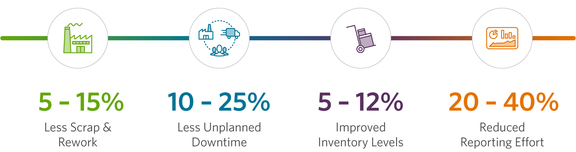
As mid-market manufacturers adapt inventory strategies to navigate a more volatile operating environment, data modernization helps turn supply chain decisions into measurable business choices. Better visibility into demand, lead times, supplier risk, and inventory performance allows leaders to determine where buffer stock is warranted, where leaner policies still make sense, and how to balance resilience with working capital efficiency.
Building a Strong Data Foundation
A modern data foundation can improve margin visibility, working capital, and decision speed across manufacturing operations. That is especially important today, as tariffs, supplier instability, and lead-time volatility make inventory strategy more dynamic and more consequential.
Implementing a data modernization strategy often includes:
- Utilizing modern platforms such as data warehouses or data lakes
- Aligning enterprise resource planning (ERP) system cost and general ledger data with key performance indicators (KPIs)
- Embedding Artificial Intelligence (AI) into daily workflows
- Connecting operational, procurement, logistics, and finance data
For manufacturers, the real power of these tools lies in their ability to make more precise decisions about sourcing, safety stock, inventory positioning, and working capital based on current operating signals. A centralized data foundation helps leaders identify supply risk earlier and reduce manual reconciliation. The right data foundation also enables manufacturers to model the financial impact of changing demand, lead times, or supplier performance. With these insights, CFOs can better analyze multi-year trends and scenario plan more efficiently.
Real-world Example
After acquiring numerous companies, a renewables equipment business based in Houston realized each entity was still operating independently without a centralized inventory data lake and procuring based on its own needs. When the CFO analyzed the company’s collective procurement, he realized it was sitting on $250 million in inventory, which was depreciating across entities.
The company decided to use a data warehouse to collect sourcing and inventory from its various entities, which gave leadership a single view of inventory across entities and helped identify excess stock, reduce duplicate purchasing and improve working capital deployment.
Creating a Strategy Supported by Infrastructure
The manufacturers that are most likely to remain competitive will be those that adopt a hybrid JIT and JIC model based on supply risk, demand predictability and financial impact. Inventory strategy has evolved from an operations decision into a capital allocation decision that affects working capital, service levels, margin resilience and the organization’s ability to respond to disruption.
That is why inventory decisions made in isolation from financial data, supplier performance, and real-time logistics will remain inherently limited. Without a unified data foundation, companies risk making broad inventory moves that either tie up unnecessary capital or leave critical materials under-protected.
For CFOs, the question is no longer whether to invest in data infrastructure, but how quickly they can build the capabilities to support better inventory and sourcing decisions. In a more volatile operating environment, the critical advantage of digital modernization is having the visibility and discipline to place inventory more strategically, respond faster to change, and protect both margin and resilience over time. With the right data foundation in place, manufacturers can carry the right inventory in the right places based on risk, service requirements and financial impact.
Collaborating With Cherry Bekaert Data Consultants
Cherry Bekaert’s Analytics & Automation Services team helps businesses unlock the full potential of their data. By aligning people, processes, data and technology, our professionals help manufacturers improve working capital, reduce manual effort, and make better margin and supply chain decisions.
We work closely with our Industrial Manufacturing professionals to build a plan tailored to each organization’s needs. Connect with us to schedule a diagnostic that identifies priority use cases, data readiness gaps and a 90-day roadmap.